
Table of Contents
Why Curtains Are More Than Just Window Coverings
Walk into any beautifully designed home and you will notice one thing they all have in common: the curtains are just right. Not too heavy, not too sheer, not too long or too short. They frame the windows perfectly, complement the walls, and somehow make the entire room feel pulled together.
Yet for most homeowners, choosing curtains is one of the most confusing parts of decorating a home. You step into a store or browse online and suddenly you are faced with dozens of options: blackout or sheer? Eyelet or pinch pleat? Linen or velvet? Custom made or ready made?
The truth is, the different types of curtains are not just about aesthetics. They serve very practical purposes too, from blocking light and insulating heat, to ensuring privacy and even improving the acoustics of a room. The right curtains can make a small room feel larger, a bright room feel cosier, and a plain room feel like it was designed by an interior stylist.
In this guide, we will walk you through every major type of curtain available today, organised clearly by material, mechanism, and usage. Whether you are designing a new home, redecorating a room, or simply looking to upgrade your window treatments, this blog will help you make an informed, confident decision.
And if you are based in Pune, you can explore the full range of premium curtains and custom window furnishing solutions at DC Furnishing Pune, where expert advice and quality craftsmanship come standard.
What Are Curtains and Why Do They Matter in Home Interiors?
Curtains, at their most basic, are fabric panels hung over windows or doorways. But in the context of interior design, they are so much more than that. They are a fundamental element of home furnishing that influences how a space looks, feels, and functions throughout the day.
Think about natural light control: curtains decide whether your morning floods with golden sunlight or stays comfortably dim. Think about privacy control: without the right window treatment, your living room is visible to every passerby after dark. And then there is temperature regulation, noise reduction, décor enhancement, and even dust protection.
In Indian homes especially, curtains do double duty. They protect interiors from intense afternoon heat, provide privacy in densely built neighbourhoods, and add colour and texture to spaces where walls are often painted in neutral tones.
Understanding the types of curtains for home use is the first step to choosing something that works beautifully in your specific space. So let us get into it.
The Main Types of Curtains: A Complete Breakdown
Curtains can be categorised in several ways: by the fabric or material they are made from, by the heading style and hanging mechanism, or by the specific room or function they are designed for. We will cover all three in this guide, starting with the most fundamental distinctions based on material and opacity.
1. Sheer Curtains
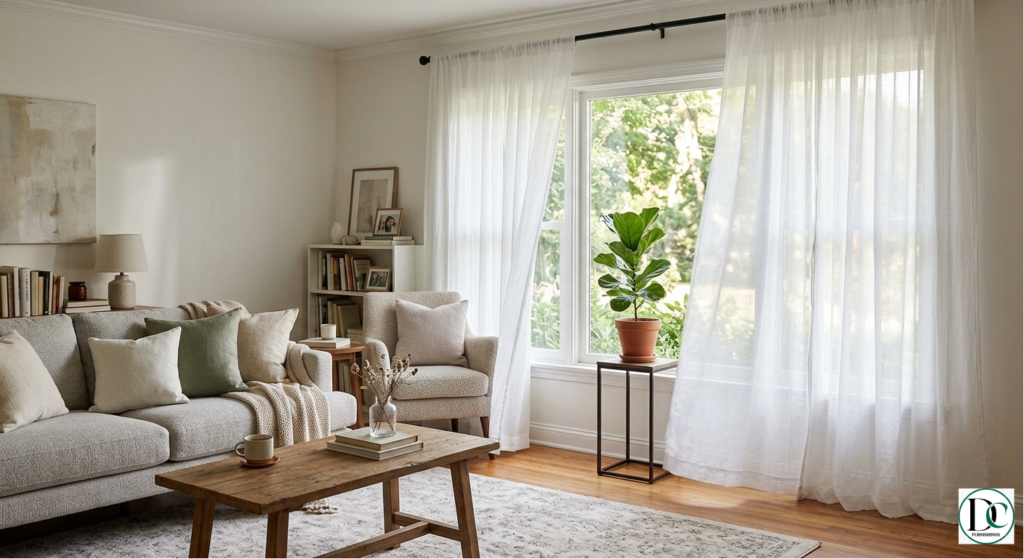
Sheer curtains are lightweight, semi transparent fabrics that allow natural light to filter through while still offering a soft degree of privacy. Made from materials like voile, organza, or fine polyester, they give rooms an airy, elegant look without completely blocking the outside world.
What are Sheer Curtains ? and where they work best? DC Furnishings breaks down benefits, fabric types, and how to choose the right sheer curtain for your home.
These are a go to choice for living rooms and dining spaces where you want to maintain a bright, open feel while softening harsh sunlight. They work especially well when layered with heavier drapes, allowing you to switch between privacy modes depending on the time of day.
• Best for: Living rooms, dining areas, sunrooms, and any space where natural light is a priority.
• Style note: Sheer curtains in white or off-white add a timeless, romantic quality to interiors.
• Pro tip: Layer sheer curtains with blackout curtains on a double rod for ultimate light-control flexibility.
Curious about how sheer curtains compare to heavier options? Check out our detailed guide on sheer curtains vs blackout curtains.
2. Blackout Curtains
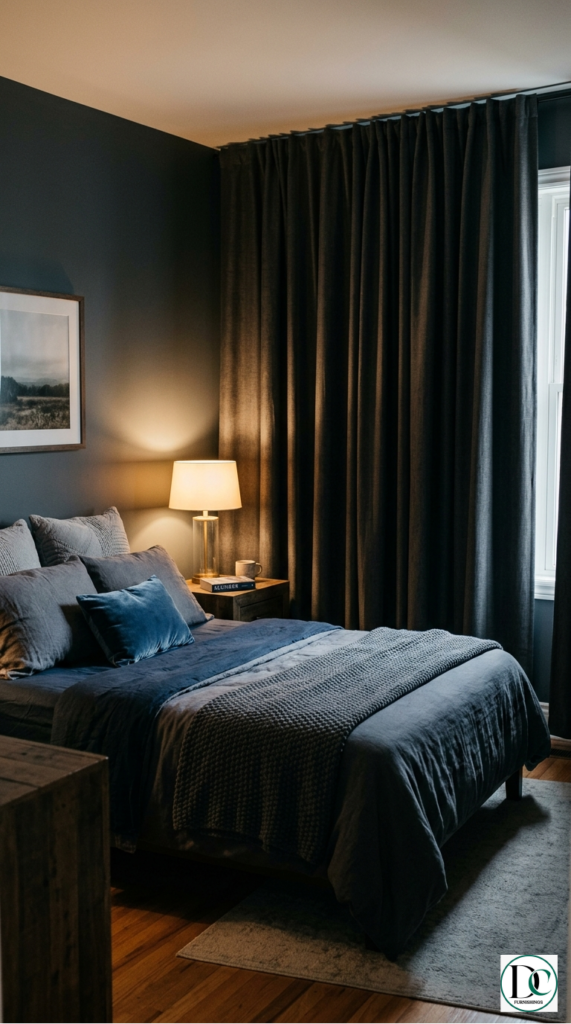
Blackout curtains are designed with a special blackout lining that blocks out virtually all external light. They are the strongest performers when it comes to light control, and they also offer benefits like thermal insulation and noise reduction.
what are blackout curtains and if they’re right for your home? DC Furnishings Pune breaks down benefits, fabric science, and how to choose the best one for your space.
For bedrooms, shift workers, or anyone who needs uninterrupted sleep, blackout curtains are essentially non-negotiable. They are also ideal for home theatres where ambient light can ruin picture quality.
• Best for: Bedrooms, home theatres, nurseries, and media rooms.
• Fabric options: Available in a wide range, from polyester blends to heavier woven fabrics with integrated blackout lining.
• Bonus benefit: Blackout curtains also help reduce electricity costs by insulating the room from heat and cold.
There are several blackout curtain types in the market based on the degree of opacity and lining quality. At DC Furnishing Pune, we can help you find the perfect blackout option for your specific needs.
3. Thermal Curtains
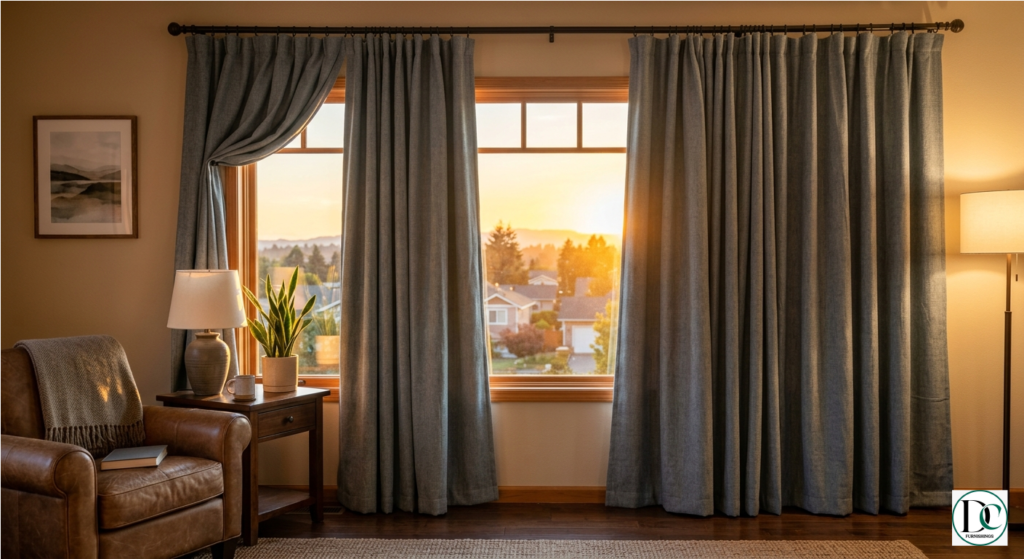
Thermal curtains go a step further than standard blackout curtains by incorporating multiple layers of insulating fabric. The construction typically includes an outer decorative fabric, a middle thermal batting layer, and a white acrylic backing that reflects heat.
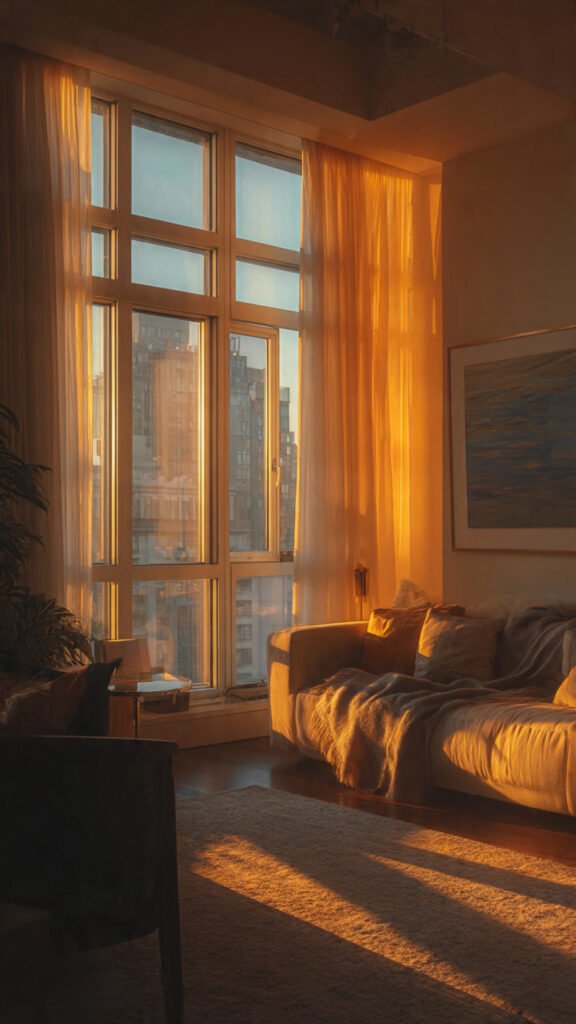
In Pune’s climate, where summers can be intense, thermal curtains can significantly reduce the indoor temperature in rooms that receive direct afternoon sun. They also work in the opposite direction during cooler months, keeping warm air inside.
• Best for: West-facing rooms, bedrooms, and any space with direct afternoon sun exposure.
• Energy efficiency: Can reduce cooling costs noticeably when combined with proper sealing around the window frame.
4. Linen Curtains
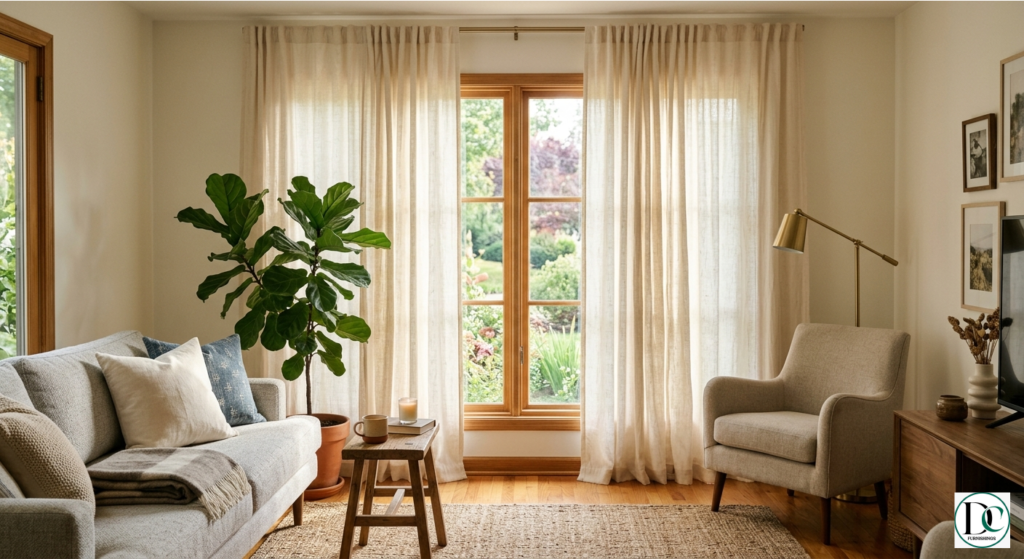
Linen curtains bring a natural, organic texture to any space. Made from flax fibres, linen is breathable, durable, and gets better with age, developing a beautiful lived-in quality that synthetic fabrics simply cannot replicate.
Linen curtains are particularly popular in contemporary and Scandinavian-influenced interior design styles. Their slightly rumpled, relaxed texture adds warmth without heaviness, and they pair beautifully with natural wood furniture, rattan, and indoor plants.
•Best for: Living rooms, bedrooms with a relaxed or natural aesthetic.
• Care note: Linen is prone to wrinkling, which is part of its charm. Steam regularly to keep them looking crisp.
• Colour range: Linen is most popular in natural tones: ivory, beige, grey, and dusty earthy hues.
For a deep dive into curtain fabrics and materials, read our full fabric selection guide.
5. Velvet Curtains
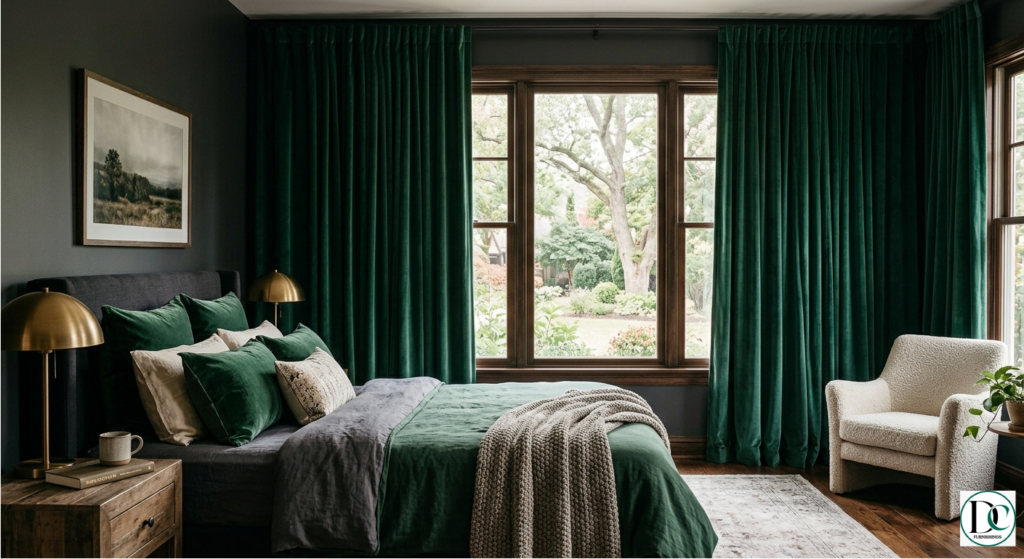
Velvet curtains are the definition of luxury in home furnishing. Their rich, plush texture immediately elevates any room, adding depth, warmth, and a sense of grandeur that few other materials can achieve.
Beyond aesthetics, velvet is surprisingly functional. The dense fabric provides excellent noise insulation, good light blocking, and strong thermal performance. It is a curtain that looks expensive and performs even better.
• Best for: Master bedrooms, formal living rooms, dining rooms, and spaces with a maximalist or classic interior design style.
• Colour tip: Deep jewel tones like emerald, sapphire, burgundy, and mustard work beautifully in velvet.
• Maintenance: Velvet should be dry cleaned. Avoid direct sunlight for extended periods to prevent fading.
Curtain Styles and Hanging Mechanisms: What Makes Each Different
The heading style of a curtain refers to how the fabric is attached to the curtain rod and how it drapes when hung. The heading style affects the overall silhouette of the curtain and, in many cases, how much fabric is required. Here are the most popular heading styles available today.
6. Eyelet Curtains
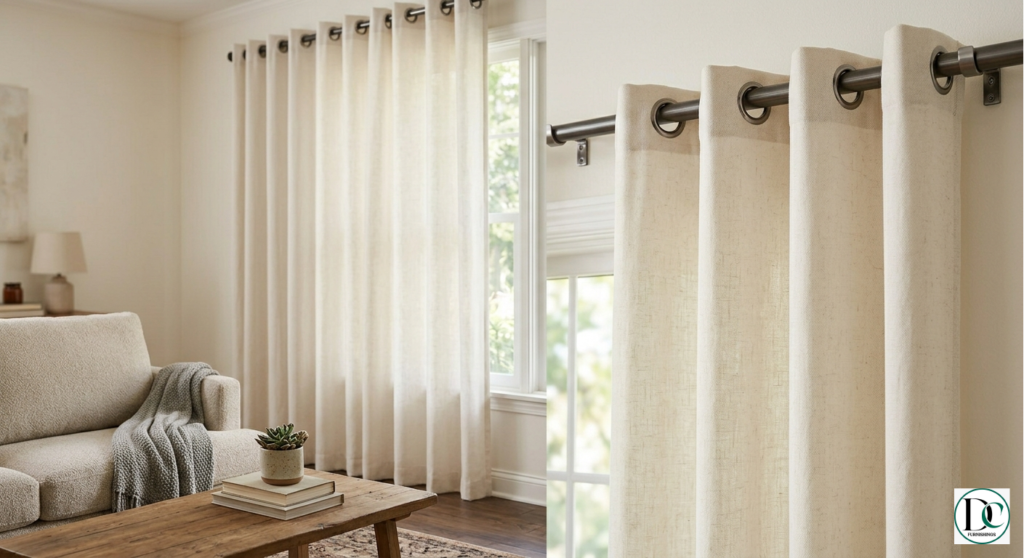
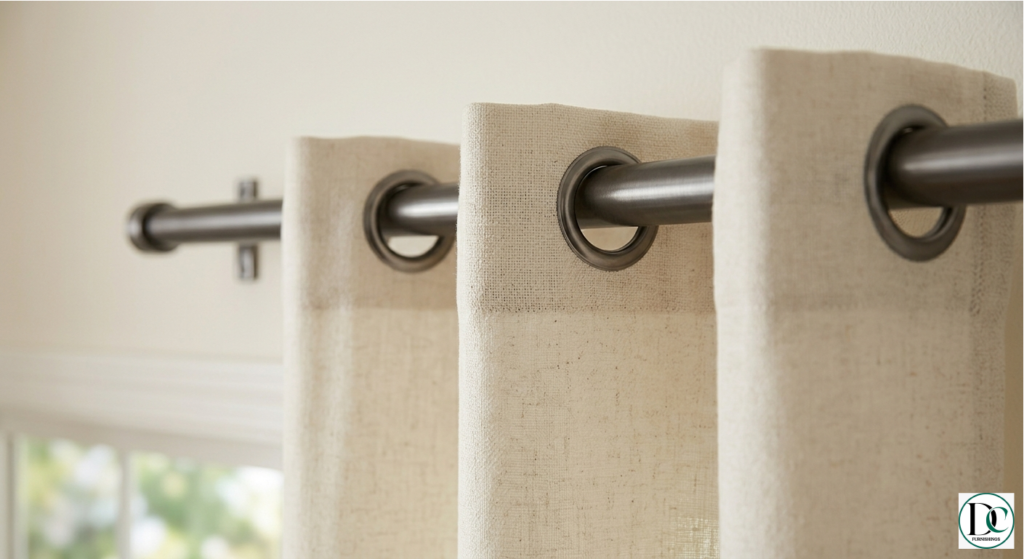
Eyelet curtains, also called grommet curtains, have large metal rings punched directly into the top of the fabric. The curtain rod threads through these rings, creating uniform, soft folds that hang in a neat, modern wave.
Eyelet curtains are one of the most popular modern curtain styles because they are easy to open and close, require no hooks or pins, and have a clean, contemporary appearance that works with most room styles.
• Best for: Living rooms, bedrooms, and modern interiors.
• Rod requirement: Requires a rod that can pass through the eyelets, typically 16 to 28mm in diameter.
• Fabric usage: Typically requires 1.5 to 2 times the width of the window for a good drape.
7. Pinch Pleat Curtains
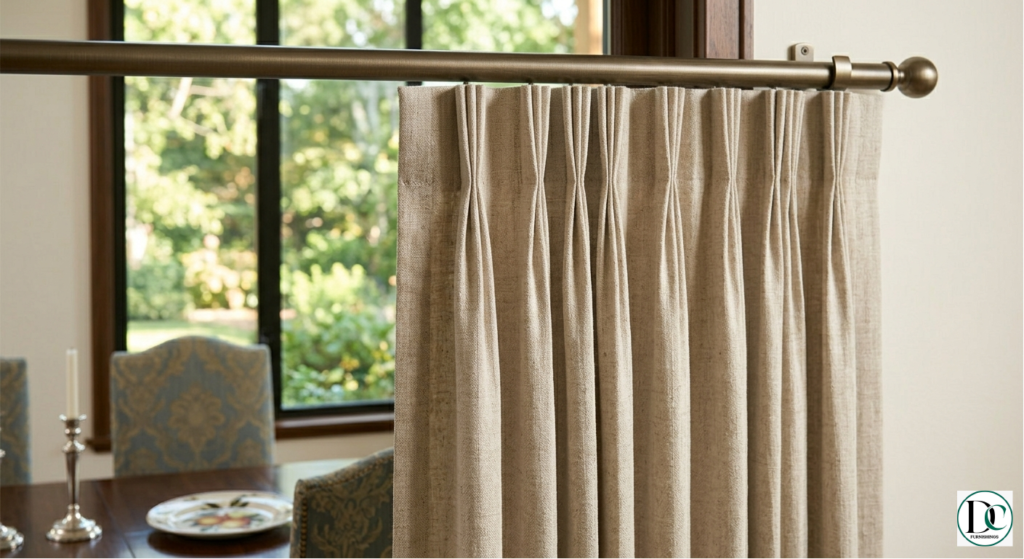
Pinch pleat curtains are a classic heading style where the fabric is gathered into neat groups of two or three pleats, stitched at the top to create a tailored, structured look. The pleats create a formal, elegant drape that gives curtains a full, rich appearance.
These are a traditional favourite in formal living and dining rooms. They hang beautifully from ceiling to floor and are particularly striking when made in heavier fabrics like velvet or structured polyester.
• Best for: Formal living rooms, dining rooms, and traditional or classic interior styles.
• Fullness: Requires 2 to 2.5 times the width of the window for proper fullness.
• Hook system: Uses hooks at the back of each pleat for attachment to the curtain track or rod.
8. Pencil Pleat Curtains
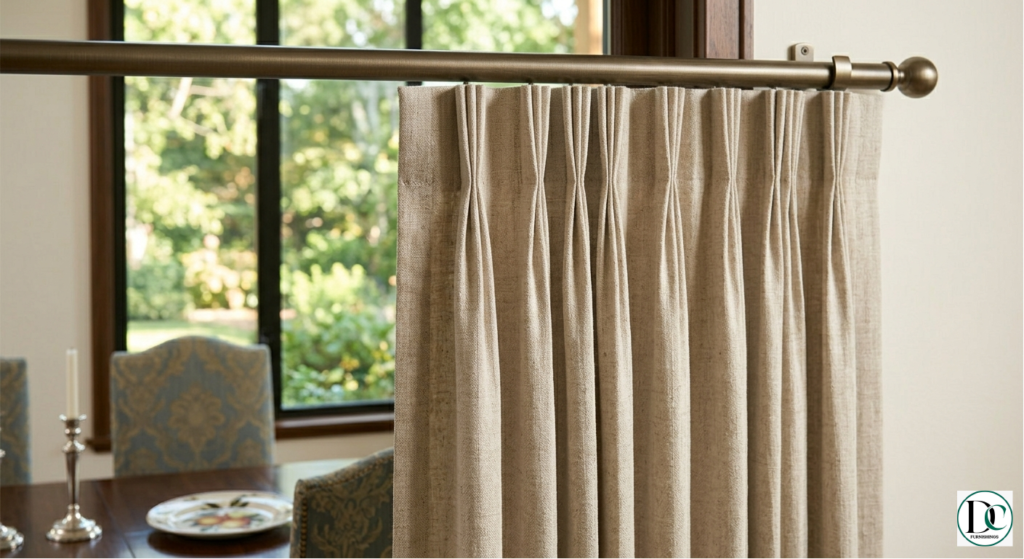
Pencil pleat curtains are perhaps the most versatile and widely used heading style in Indian homes. The fabric is gathered into tight, even folds that resemble a row of pencils standing side by side. The result is a soft, full look that suits both formal and casual settings.
Unlike pinch pleat curtains, pencil pleat headings can be adjusted easily, making them a practical choice for those who want to change the fullness or hang height periodically.
• Best for: All room types; works well with both modern and traditional interiors.
• Flexibility: Hooks can be repositioned to adjust the drop length.
• Fullness: Typically requires 2 to 2.5 times the track width.
9. S Fold Curtains (Wave Fold Curtains)
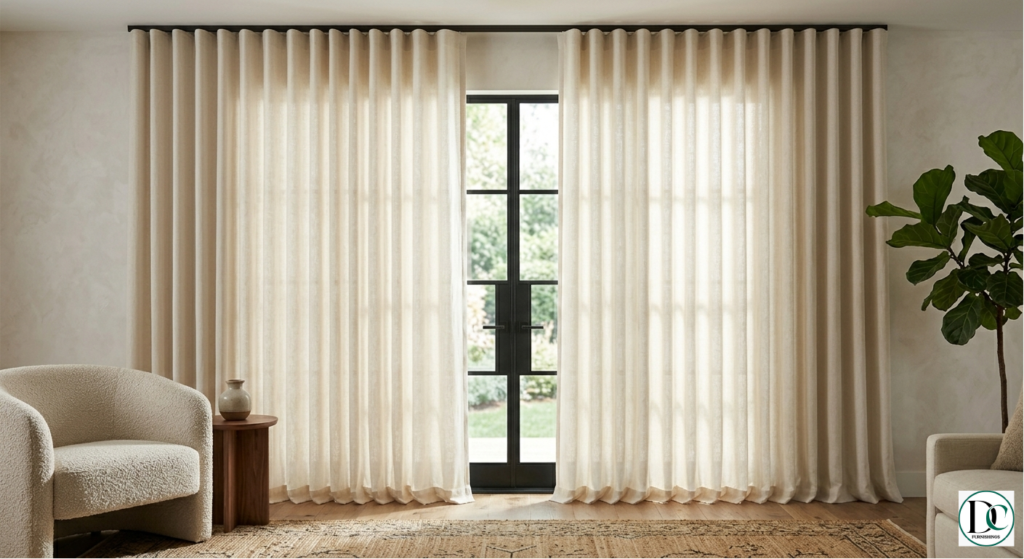
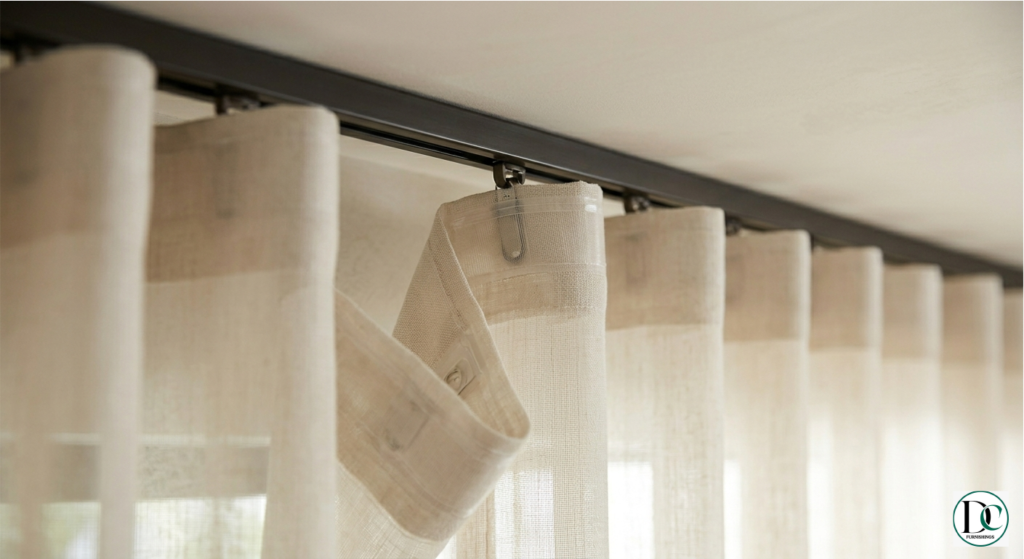
S Fold curtains, also known as wave fold curtains, create a continuous, rippling wave effect across the entire width of the panel. Unlike other heading styles that gather fabric into pleats or folds, S Fold curtains use special carriers on a track system to maintain the wave shape consistently whether the curtain is open or closed.
The result is an incredibly sleek, contemporary look that is currently one of the most requested
The result is an incredibly sleek, contemporary look that is currently one of the most requested modern curtain styles in premium residential and commercial interiors.
• Best for: Minimalist interiors, open-plan living areas, and spaces with floor-to-ceiling windows.
• Track requirement: Requires a specialised S Fold track system, not a standard rod.
• Fabric usage: Typically 1.8 to 2 times the track width.
See how S Fold curtains are shaping modern curtain designs for living rooms in Pune and beyond.
10. Reverse Tab Curtains
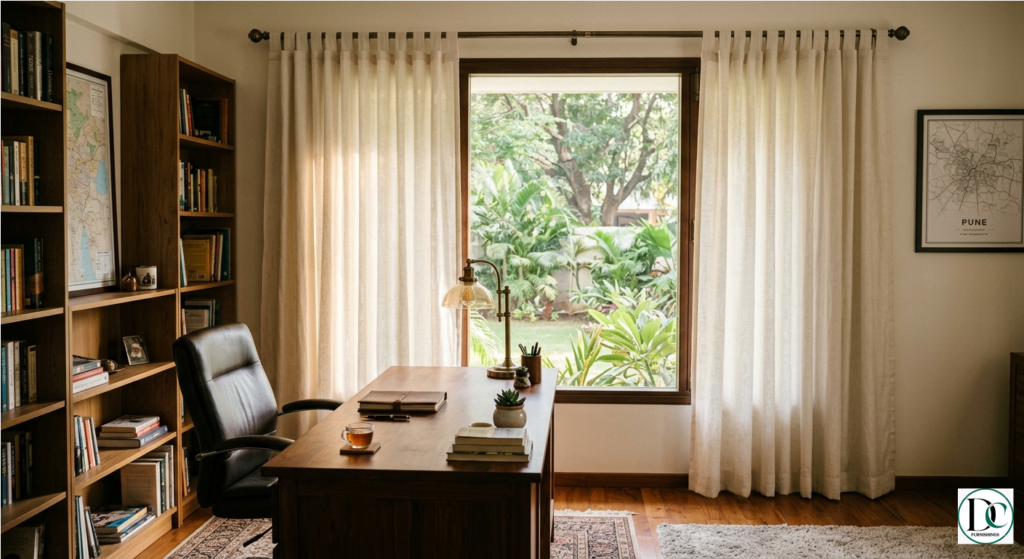
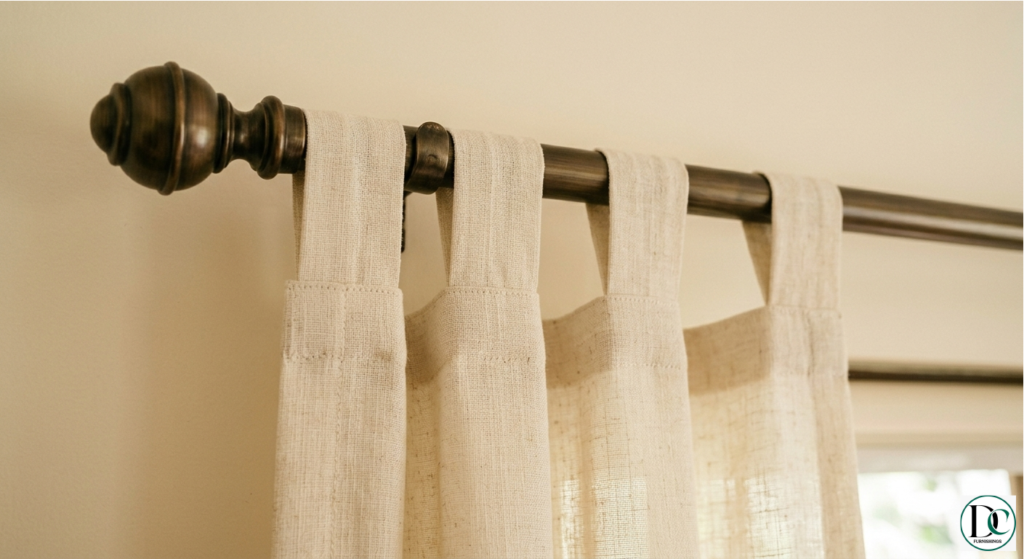
Reverse tab curtains are a variation of the classic tab-top heading style, but with the tabs sewn to the back of the curtain rather than the front. When hung, the fabric folds forward over the rod, concealing the tabs and creating a clean, seamless look from the front.
This style works well in contemporary and transitional interiors where a streamlined look is preferred, but where S Fold tracking is not practical.
• Best for: Bedrooms, study rooms, and spaces with a contemporary aesthetic.
• Rod type: Works with standard exposed rods, adding visual interest to the hardware.
Curtains by Usage: Specialized Options for Specific Rooms
11. Home Theatre Curtains
Home theatre curtains are purpose-built for maximum light blockage and acoustic performance. They are almost always made with heavy blackout lining and dense fabrics like velvet or thick polyester, which absorb sound as well as block light.
The goal of a home theatre curtain is to create a true cinema experience: complete darkness during playback, minimal echo, and a finished, premium aesthetic that matches the dedicated entertainment purpose of the room.
• Fabric choice: Velvet or multi-layer blackout polyester.
• Colour recommendation: Dark tones, typically charcoal, navy, or black, to minimise light reflection.
• Side and top panels: Consider curtaining the side walls as well for a full theatrical effect.
12. Kids Curtains
Curtains for children’s rooms need to balance practicality with fun. Kids curtains are typically made from easy care, washable fabrics that can handle the wear and tear of a busy child’s room. They often come in playful colours, patterns, and prints that can make a child’s room feel exciting and personal.
At the same time, parents often want blackout functionality in kids rooms to support healthy sleep routines, especially for younger children and toddlers.
• Material: Washable cotton or polyester blends.
• Function: Light filtering or blackout lining for nap times and early bedtimes.
• Design: Characters, stripes, geometrics, and nature themed prints are popular.
• Safety note: Choose curtains with short lengths or tie backs out of a child’s reach. Avoid looped cords.
Choosing Curtains by Room Type
The right curtain type is not just about material or style; it is also about where in your home it will live. Different rooms have different requirements, and a curtain that works perfectly in a bedroom may be completely wrong for a kitchen.
Living Room Curtain Types
The living room is typically the most visible and social space in the home. Curtain styles for living rooms need to be beautiful enough to make a statement and functional enough to handle regular use.
• S Fold or Eyelet curtains work beautifully in modern living rooms with clean lines.
• Pinch Pleat or Pencil Pleat curtains suit traditional and transitional interiors.
• Sheer curtains layered with heavier drapes give you maximum flexibility for different times of day.
• Linen curtains bring a relaxed, upscale quality to contemporary living spaces.
Read more about the best curtains for living rooms, including colour coordination and length guides.
Bedroom Curtain Types
Bedroom curtain types prioritise comfort, privacy, and sleep quality above all else. Blackout curtains are the most popular choice, either as standalone panels or layered with a sheer under curtain.
• Blackout curtains are essential if your bedroom receives morning light or faces a street.
• Thermal curtains can reduce noise from traffic and improve temperature comfort.
• Velvet curtains add a sense of luxury and work well in master bedrooms.
• Soft linen curtains in neutral tones suit a calm, minimalist bedroom aesthetic.
Kitchen Curtain Types
Kitchens require practical curtains that can handle moisture, cooking odours, and easy washing. Short café-style curtains or half curtains are popular in kitchens as they allow light in from the top while maintaining privacy at counter level.
• Cotton fabrics are best for easy washing.
• Avoid heavy or floor-length curtains in kitchens as they can be a safety and hygiene concern.
• Light filtering fabrics in cheerful colours or patterns work well.
Curtain Fabrics and Materials: A Quick Reference Guide
Choosing the right curtain fabrics and materials is just as important as choosing the right style. Here is a quick reference to help you match fabric to function:
• Cotton: Versatile, breathable, and easy to wash. Works in any room. Available in hundreds of patterns and colours.
• Linen: Natural, textured, and elegant. Best in living rooms and bedrooms. Adds warmth without heaviness.
• Velvet: Luxurious and heavy. Excellent for light blocking, insulation, and noise reduction. Best in formal spaces and bedrooms.
• Polyester: Durable, affordable, and easy to maintain. Available with blackout or thermal linings. Suitable for all rooms.
• Silk and Silk Blends: Elegant and light-catching. Best in formal rooms. Requires careful maintenance and is sensitive to sunlight.
• Sheer Fabrics (Voile, Organza): Lightweight and translucent. Best used as an inner layer for diffused light without full privacy.
For a comprehensive breakdown of every fabric option, visit our complete guide to curtain fabrics.
Custom Made vs Made to Measure vs Ready-Made Curtains: What is the Difference?
When it comes time to actually purchase curtains, you will encounter three main options. Understanding what each means will save you from expensive mistakes.
Custom Made Curtains
Custom made curtains are designed from scratch, entirely according to your specifications. You choose the fabric, the heading style, the lining, the dimensions, and any other details. These are crafted by a skilled tailor or curtain maker, usually from a fabric sourced by you or provided by the manufacturer.
Custom made curtains are the most expensive option but also the most rewarding. They fit your windows precisely, use the exact fabrics you want, and are built to a standard that off-the-shelf products simply cannot match.
Learn more about the benefits of custom curtains and why they are often worth the investment for long-term homeowners.
Made to Measure Curtains
Made to measure curtains are a middle ground between custom and ready-made. You provide your exact window measurements, and the curtains are manufactured to those dimensions from a set range of fabrics and styles chosen by the supplier. You get a precise fit without the full cost or timeline of completely bespoke curtains.
Not sure how to measure your windows correctly? Our curtain measurement guide walks you through the process step by step.
Ready Made Curtains
Ready made curtains are pre-manufactured in standard sizes and sold off the shelf, either in stores or online. They are the most affordable and immediately available option, making them ideal for renters, temporary spaces, or rooms where the window dimensions happen to match standard sizes.
The drawback is obvious: standard sizes rarely match perfectly. You may end up with curtains that are too wide, too narrow, or slightly too long, which can compromise both the look and the functionality.
How to Choose the Right Curtains: A Step by Step Guide
Now that you understand the types and materials available, here is a practical framework for making your decision:
- Define the room’s purpose. Is it a bedroom that needs darkness? A living room that needs layered light? A kitchen that needs easy care?
- Measure your windows accurately. Measure width and height, and decide whether you want floor-length curtains or a shorter drop.
- Choose the right fabric. Match fabric weight and properties to your functional requirements: blackout for bedrooms, sheer for living rooms, washable cotton for kitchens.
- Pick a heading style. Consider the overall aesthetic of your room: S Fold for modern spaces, Pinch Pleat for traditional, Eyelet for easy everyday use.
- Decide on lining. Unlined curtains are lighter and work for decorative purposes. Lined curtains have better drape, insulation, and durability. Blackout-lined curtains block light completely.
- Choose custom, made to measure, or ready-made. Base this on your budget, timeline, and how important a perfect fit is to you.
- Coordinate with your existing décor. Consider wall colour, flooring, furniture upholstery, and the amount of natural light your room receives.
For more inspiration, explore the top curtain styles for 2025 and find out what is trending in Indian home interiors.
Common Mistakes People Make When Choosing Curtains
Even with the best intentions, it is easy to make a misstep when selecting curtains. Here are the most common ones to avoid:
• Hanging curtains too low: Mount your curtain rod as close to the ceiling as possible. Low rods make rooms feel smaller and curtains look afterthought.
• Choosing the wrong width: Curtains should be at least 1.5 to 2.5 times the width of your window. Too-narrow curtains look skimpy and fail to block light properly from the sides.
• Ignoring the lining: The lining dramatically affects how a curtain drapes, how long it lasts, and how well it performs. Never overlook it.
• Buying ready-made for non standard windows: If your windows are an unusual size, do not force a standard curtain to fit. Invest in made to measure or custom curtains.
• Matching curtains too perfectly to walls: Curtains that are the exact same colour as your walls tend to disappear. A slight contrast or texture difference usually looks more intentional and polished.
• Forgetting maintenance requirements: Velvet needs dry cleaning. Linen wrinkles. Sheer fabrics need gentle washing. Choose a fabric you can realistically maintain.
• Overlooking the track or rod: A beautiful curtain on an ugly or unsuitable track undoes all the effort. Choose hardware that complements both the curtain style and the room.
Read our guide on why quality home furnishings are worth investing in to understand the long term value of getting it right the first time.
Frequently Asked Questions About Types of Curtains
1. What are the most popular types of curtains for home use?
The most commonly used curtain types in Indian homes are eyelet curtains, pencil pleat curtains, and sheer curtains. Blackout curtains are especially popular for bedrooms, while S Fold curtains are increasingly chosen for modern living spaces with large windows.
2. What is the difference between sheer curtains and blackout curtains?
Sheer curtains are made from lightweight, translucent fabric that allows diffused natural light through while offering soft privacy. Blackout curtains are made with a dense fabric and blackout lining that blocks virtually all external light. The two are often used together on a double rod for maximum flexibility.
3. Which curtains are best for bedrooms?
Blackout curtains are the most practical choice for bedrooms, as they block light and support healthy sleep. Thermal or velvet curtains are excellent for added warmth and noise reduction. For aesthetics, linen curtains in neutral tones create a calm, restful ambience, especially when paired with a blackout lining.
4. What is the difference between custom made and made to measure curtains?
Custom made curtains are designed entirely from scratch according to your specifications, giving you complete control over fabric, style, dimensions, and finish. Made to measure curtains are manufactured in your specific dimensions but from a pre-existing range of fabrics and heading styles offered by the supplier. Both give you a precise fit that ready-made curtains cannot.
5. What are S Fold curtains and who should use them?
S Fold curtains, also known as wave fold curtains, create a continuous, uniform wave effect when hung from a specialised track. They are ideal for anyone who wants a sleek, contemporary look in a living room, open-plan space, or room with floor-to-ceiling windows. They require an S Fold-compatible track system rather than a standard rod.
6. Are thermal curtains worth buying in Pune’s climate?
Yes, especially for rooms that face west and receive intense afternoon sun. Thermal curtains can noticeably reduce indoor temperatures, protect furniture from UV fading, and help reduce electricity bills by lowering the load on air conditioning. They are particularly effective when the curtain is close to the window frame to minimise heat circulation around the edges.
7. How do I measure my windows for curtains?
Measuring correctly is critical to getting curtains that look right. Measure the width of your window or track, then multiply by 1.5 to 2.5 depending on the fullness you want. For the drop, measure from the top of the rod or track to the floor (for floor-length) or to the sill (for sill length). Our curtain measurement guide explains this in full detail.
8. What curtain types are best for kids’ rooms?
For children’s rooms, look for washable fabrics like cotton or polyester blends that can handle frequent cleaning. Blackout lining is highly recommended to support daytime naps and early bedtimes. Choose curtains with short lengths and no looped cords, which are a safety hazard in children’s spaces. Fun prints, bright colours, and character themes work well for making the room feel personal and playful.
9. What is the best curtain style for a small living room?
In small living rooms, the goal is to make the space feel taller and wider. Hang curtains as close to the ceiling as possible and extend the rod well beyond the window frame on both sides. Use light-coloured or sheer fabrics to avoid visually shrinking the room. S Fold or Eyelet curtains with a clean silhouette work particularly well in compact spaces.
10. Can I use velvet curtains in a warm climate?
Yes, but choose wisely. In warmer climates like Pune, velvet curtains work best in air-conditioned rooms or in areas that do not receive direct sunlight for extended periods. Their density actually helps maintain cooler indoor temperatures when the AC is running. Avoid placing velvet curtains in rooms with significant sun exposure, as they can fade and retain heat near the window.
Conclusion: The Right Curtains Make All the Difference
Choosing the right curtains is one of the most impactful decisions you can make in a home interior project. A well-chosen curtain does not just cover a window; it frames a view, sets a mood, controls light, and defines a room’s character.
The good news is that once you understand the different types of curtains, from sheer to blackout, from eyelet to S Fold, from ready-made to fully custom, the decision becomes much more manageable. You simply match the curtain type to the room’s function, the fabric to your maintenance preference, and the heading style to your overall aesthetic.
Whether you are outfitting a cosy bedroom in need of blackout darkness, a sunlit living room that deserves elegant sheers, or a home theatre that demands total light control, there is a curtain solution designed exactly for that purpose.
Ready to Transform Your Home with the Perfect Curtains?
Visit DC Furnishing Pune or call us to explore premium custom curtain designs for your home. Our expert team will help you choose the right fabric, style, and heading for every room, and craft curtains that fit your windows and your vision perfectly.
DC Furnishing Pune
Address: Kunte Chowk, 693, Laxmi Rd, Bhatancha Bol, Narayan Peth, Pune, Maharashtra 411030
Phone: 76207 54159
Website: dcfurnishing.com
Instagram : dcfurnishingpune
Contact Us: Get in Touch
Walk into our showroom and discover the difference that truly premium, thoughtfully crafted curtains make to a home.
© DC Furnishing Pune | Premium Curtains and Custom Home Furnishing