Table of Contents
“What Are Blackout Curtains? Complete Guide for Indian Homes“
Written by DC Furnishings Team | Reviewed by DC Furnishings Team Pune’s home furnishings experts, specializing in custom curtains, upholstery, and window treatments.
If you’ve ever been jolted awake at 6 AM by harsh Pune sunlight streaming through your sheer curtains, or found yourself squinting at the TV because streetlight glare keeps bouncing off the screen, you already know the problem blackout curtains were built to solve. So, what are blackout curtains, exactly? They’re specially constructed window treatments made with a dense, tightly woven fabric (often combined with a special lining) designed to block out nearly all external light, insulate your room against heat, and add a layer of privacy that regular curtains simply can’t match.
In this guide, we’ll break down how blackout curtains actually work, their real benefits, who should consider them, and how to pick the right one for your home, based on what we’ve seen work (and not work) for homeowners across Pune.
What Are Blackout Curtains?
Blackout curtains are curtains made from a thick, densely woven fabric, sometimes reinforced with an additional opaque lining, that’s specifically engineered to block sunlight and outside light almost completely. Unlike regular curtains, which are designed primarily for style, privacy, or light filtering, blackout curtains prioritize light control and insulation above all else.
The key difference between blackout curtains and regular curtains comes down to construction. A regular cotton or linen curtain will filter light, softening it as it enters the room, but it won’t stop it. A blackout curtain, on the other hand, is built in layers, often with a foam or acrylic backing bonded to the base fabric, specifically to prevent light penetration.
If you’re still deciding between curtain types altogether, our guide on types of curtains covers how blackout curtains compare with sheers, drapes, and other popular styles.
How Do Blackout Curtains Work?
This is the part most blogs skip, and it’s worth understanding before you buy.
Most blackout curtains use a triple weave construction: three tightly woven fabric layers stitched together, which is what gives them their light blocking power. The tighter the weave and the higher the fabric’s GSM (grams per square metre, essentially a measure of fabric density and thickness), the more effective the curtain is at blocking light. As a rough guide, fabrics in the 300 400 GSM range tend to offer near-total blackout, while lighter fabrics under 200 GSM will dim a room but not fully darken it.
There’s also an important distinction between blackout fabric and blackout lining:
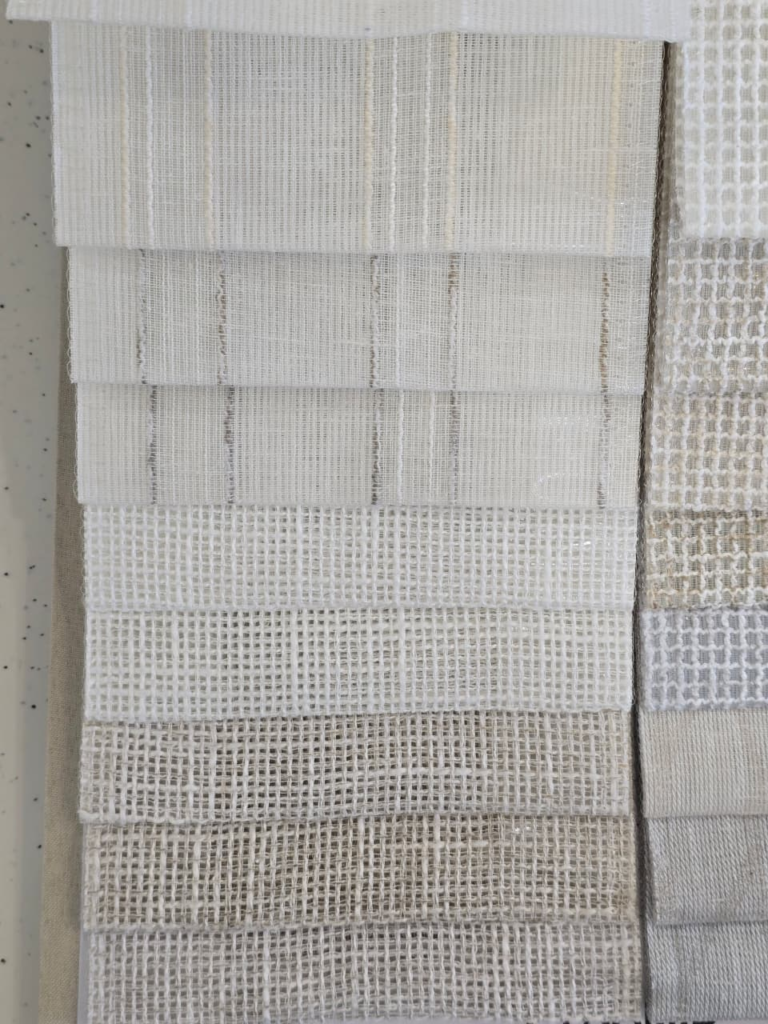
- Blackout fabric is inherently opaque, the light blocking property is built into the material itself, usually through a tight weave or a coating applied during manufacturing.
- Blackout lining is a separate opaque layer stitched to the back of a decorative curtain fabric. This lets you keep a lighter, more stylish outer fabric (say, a linen or a printed cotton) while still getting blackout performance from the lining behind it.
For homeowners who want a specific look but also want full light control, opting for a curtain with a quality blackout lining is often the better route, you don’t have to compromise on aesthetics.
Benefits of Blackout Curtains
Blackout curtains do more than just darken a room. Here’s what they actually bring to the table:
- Light blocking &Room darkening
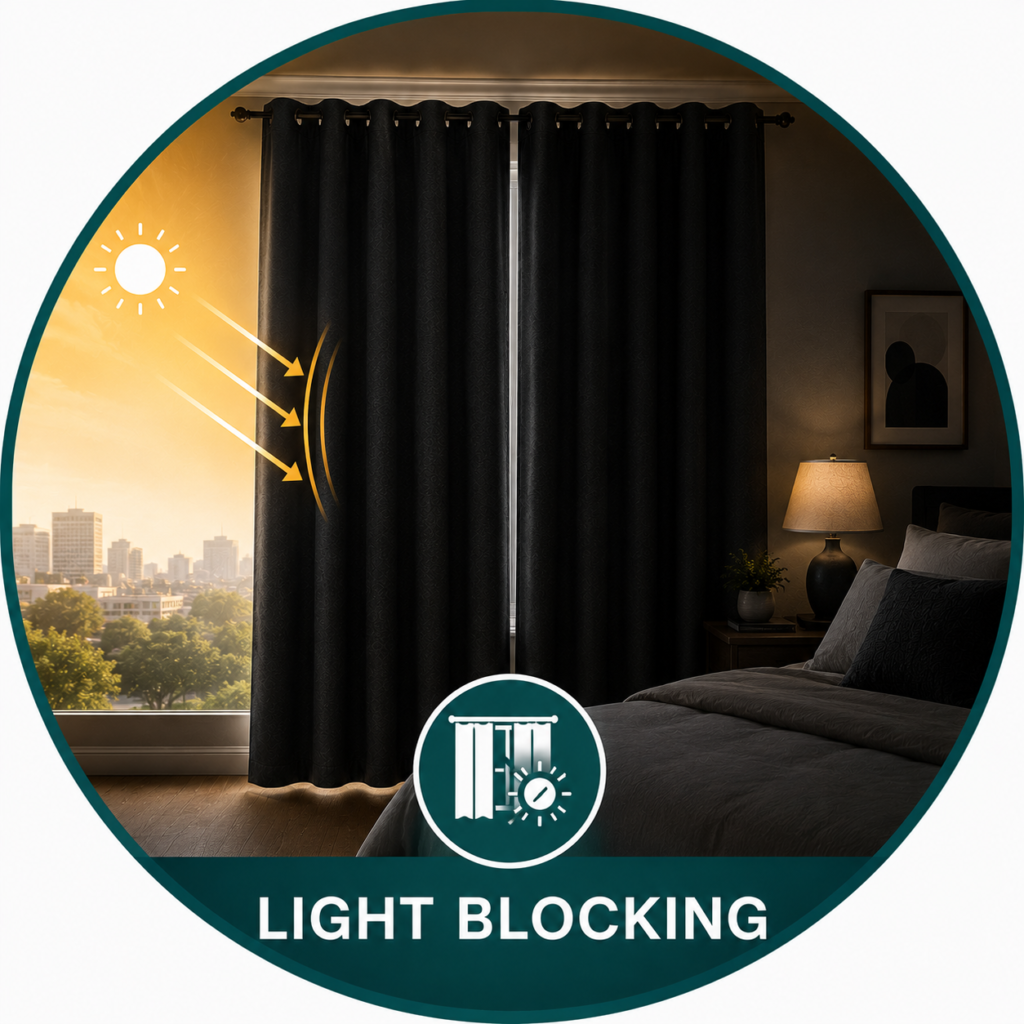
This is the headline benefit, a properly fitted blackout curtain blocks the vast majority of external light, making it far easier to sleep in, work in, or watch a movie in a fully darkened room.
2. Thermal insulation
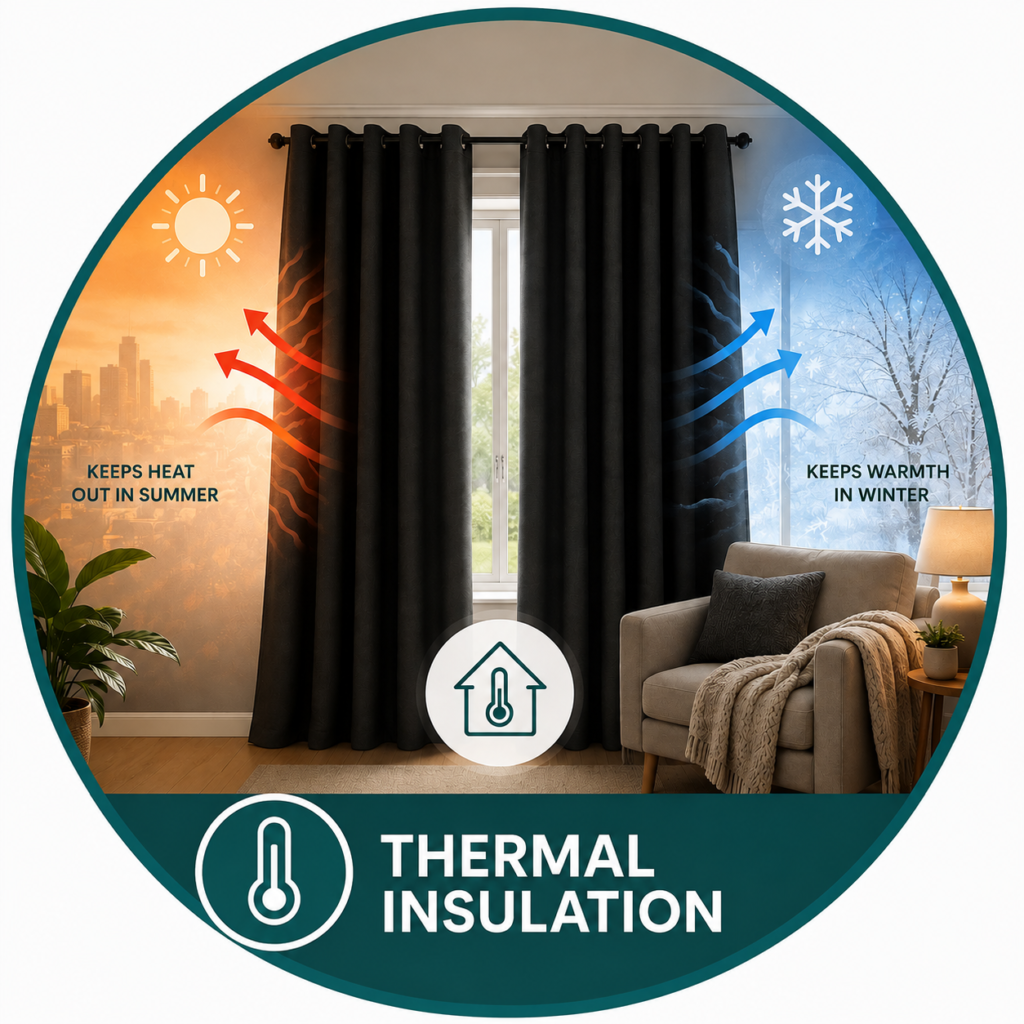
Blackout curtains do more than block light, they also add a layer of thermal insulation. According to the U.S. Department of Energy, properly installed insulated curtains can reduce heat loss by up to 25 30%, which is especially useful in Pune homes running AC through peak summer months. The dense fabric layers create a barrier that slows heat transfer through the window, which is exactly why blackout curtains are increasingly popular in west-facing rooms that catch the brunt of the afternoon sun, ideal for Pune’s hot summers and monsoon glare, when both heat and diffused daylight can be relentless.
3. Noise reduction
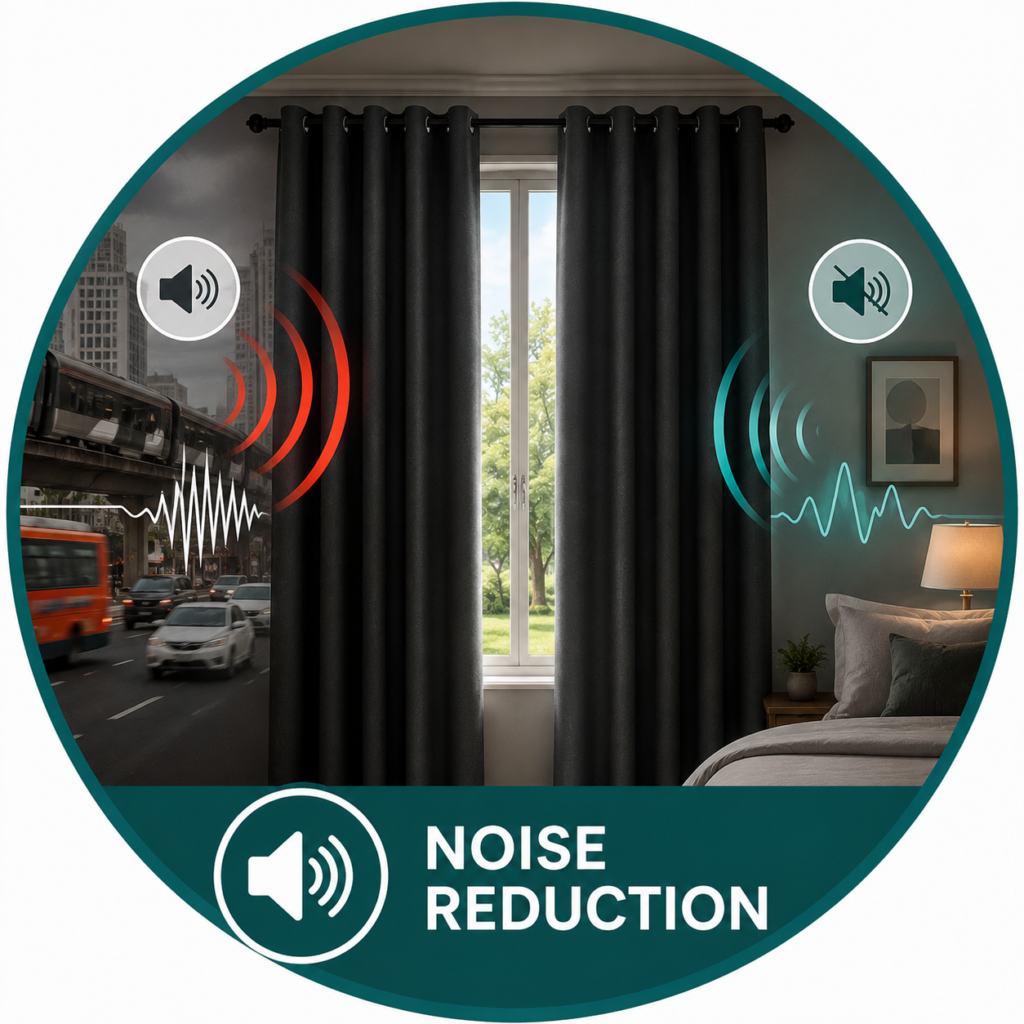
It’s worth being upfront here: blackout curtains reduce outside noise, they don’t eliminate it. The same dense, layered fabric that blocks light also absorbs some sound, which makes a noticeable difference if you live on a busy road, but if you’re expecting soundproofing-level silence, that’s a job for acoustic panels, not curtains.
4. UV protection
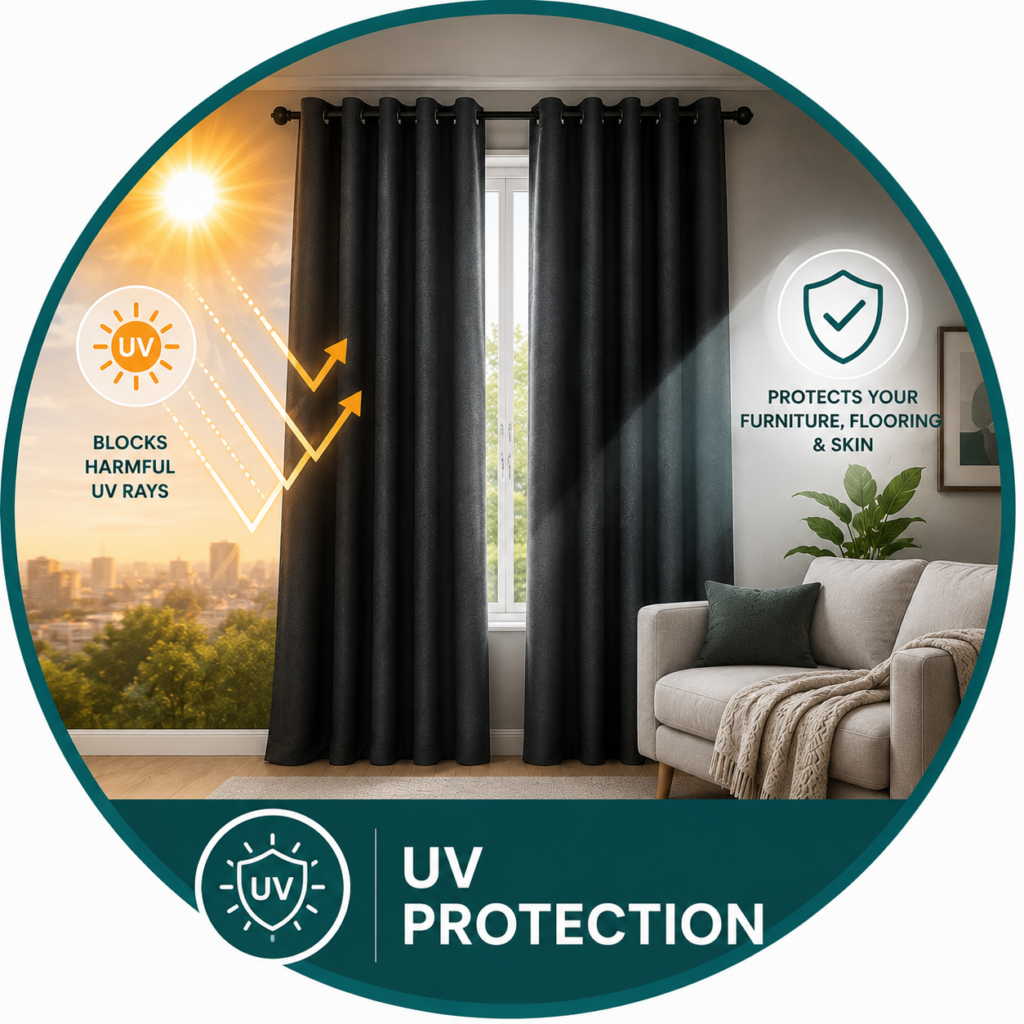
Sunlight doesn’t just heat up a room, it fades furniture, flooring, and artwork over time. The tightly woven fabric in blackout curtains blocks a significant portion of UV rays, helping protect your interiors.
5. Energy efficiency
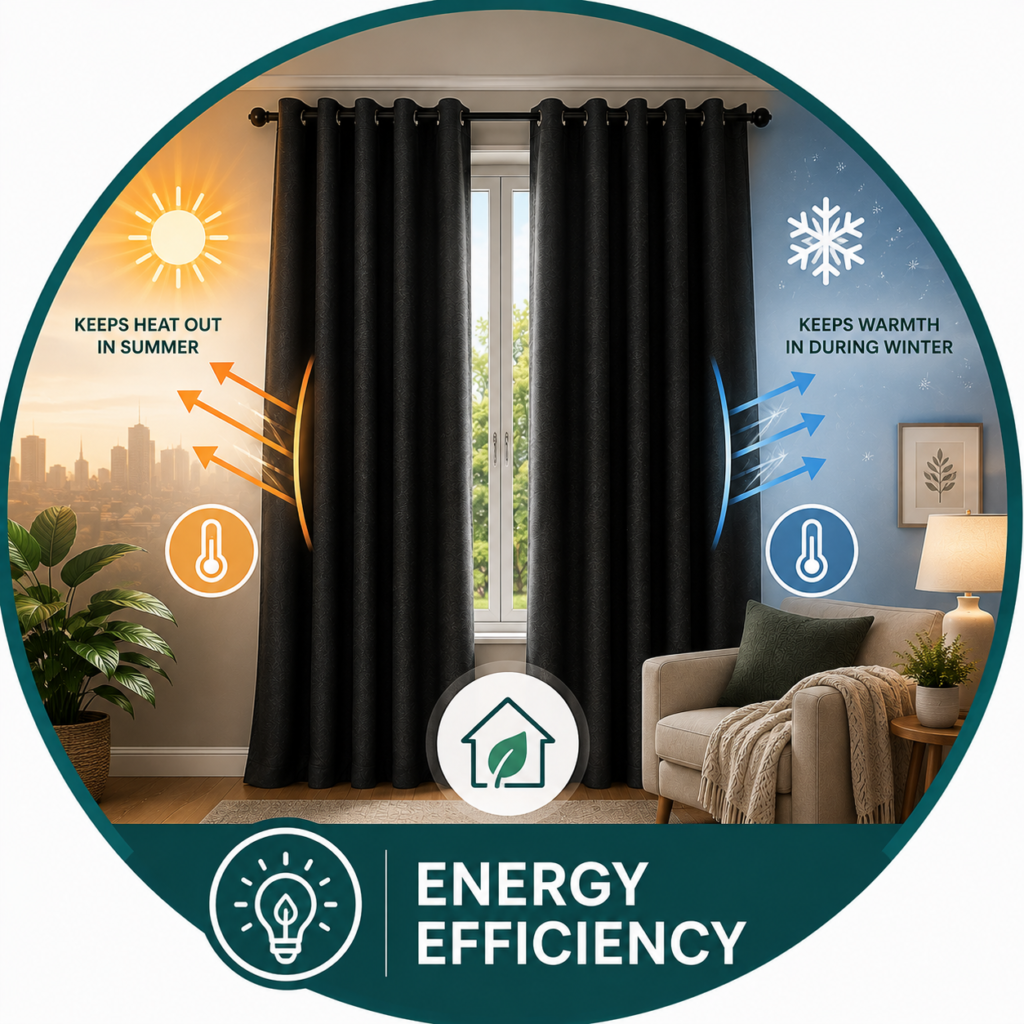
By reducing heat gain in summer and heat loss in winter, blackout curtains can lower the load on your air conditioning or heating, translating to modest savings on your electricity bill over time.
6. Privacy control
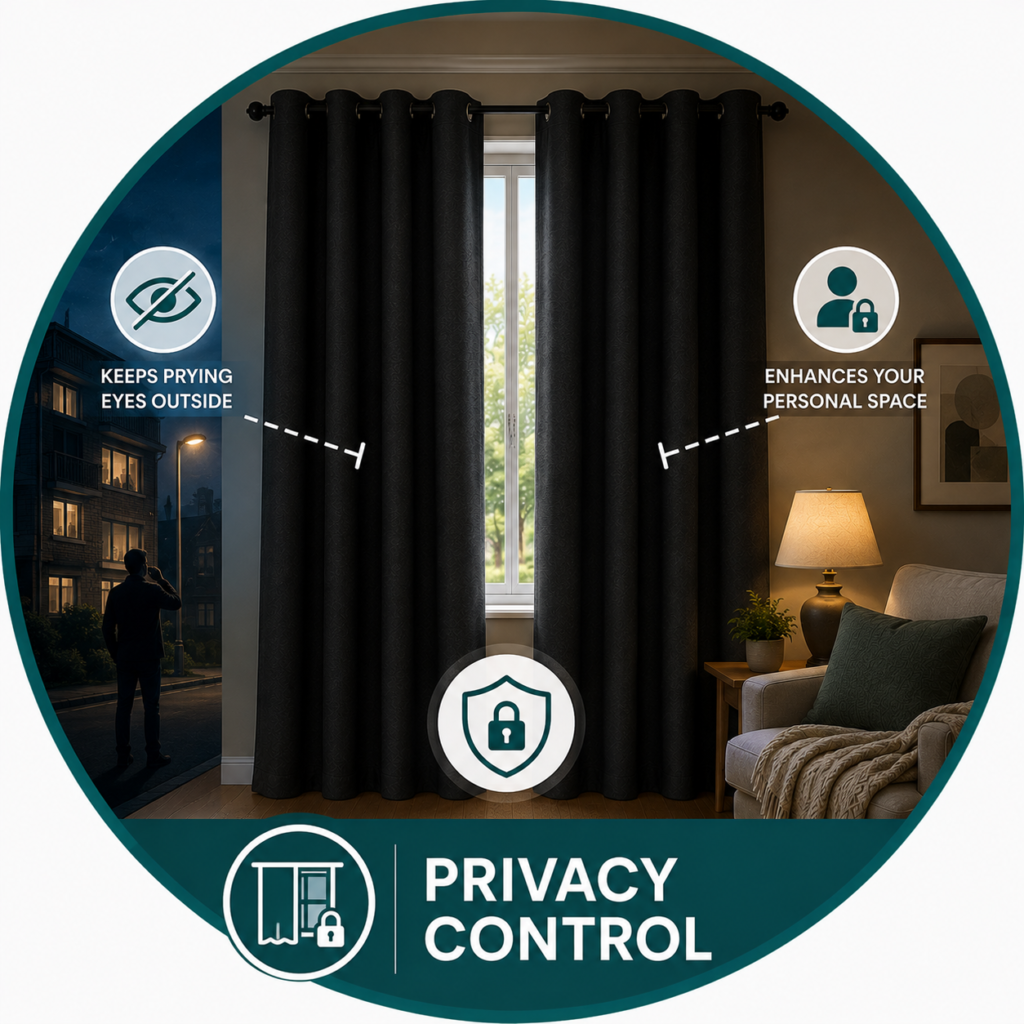
Because blackout curtains block light in both directions, they also prevent anyone outside from seeing in, even with interior lights on at night, which regular curtains often fail to fully block.
If you’re exploring how curtains can be tailored to your specific space, our page on the benefits of custom curtains goes deeper into fit, fabric choice, and design options.
Blackout Curtains vs Regular Curtains
| Factor | Blackout Curtains | Regular Curtains |
|---|---|---|
| Light Control | Blocks 95–100% of light | Filters and softens natural light without completely blocking it. |
| Noise Reduction | Moderately reduces outside noise. | Provides minimal sound reduction. |
| Insulation | Excellent thermal insulation that helps maintain indoor temperature. | Low to moderate insulation depending on fabric thickness. |
| Privacy | Provides excellent privacy, even during the night. | Moderate privacy that varies based on the fabric and opacity. |
| Best For | Bedrooms, home theatres, nurseries, and night-shift workers. | Living rooms, dining areas, and spaces where natural daylight is preferred. |
To be clear, blackout curtains aren’t automatically the “better” choice for every room. In spaces where you want soft, filtered daylight during the day (a living room or a reading nook, for instance), a sheer or regular curtain often does the job better, letting the room breathe visually while blackout curtains stay reserved for spaces where total light control genuinely matters.
Who Should Buy Blackout Curtains?
Blackout curtains aren’t just for one type of household, they solve very different problems depending on who’s using them:
- Night shift professionals who need to sleep during daylight hours and can’t afford a bright room disrupting their rest.
- Families with babies or toddlers, where consistent, dark nap and sleep environments genuinely matter for a child’s schedule.
- Home theatre enthusiasts who want true cinema-level darkness for the best possible viewing experience.
- Apartment owners in close quarter buildings who want privacy without sacrificing on style.
- People living on busy roads, where the combination of noise and streetlight glare makes blackout curtains a practical upgrade.
- Home office users dealing with screen glare from harsh daylight, especially in rooms with large west-facing windows.
If your living room is where you’re focused on style and lighting decisions, our guide on modern curtain designs for living rooms is a good next stop.
Best Blackout Curtains for Home, Room Wise Recommendations
Blackout Curtains Bedroom
This is where blackout curtains earn their keep the most. For a home where dark, sleep-friendly conditions matter, full blackout curtains for bedroom use are almost always worth the investment, especially in rooms facing east or west where sunlight is more direct.
Blackout Curtains Living Room
Here, we’d actually recommend caution. Full blackouts in a living room can make the space feel closed off during the day. Consider layering, a sheer curtain for daytime use, with a blackout option for evenings when needed, or reserve full blackout only for media/entertainment corners. Our detailed guide on how to choose curtains for your living room walks through these trade offs in more depth.
Blackout Curtains Home Theatre / Media Room
This is one space where full blackout is almost non-negotiable, even small amounts of ambient light noticeably affect screen contrast and viewing quality.
How to Choose Blackout Curtains
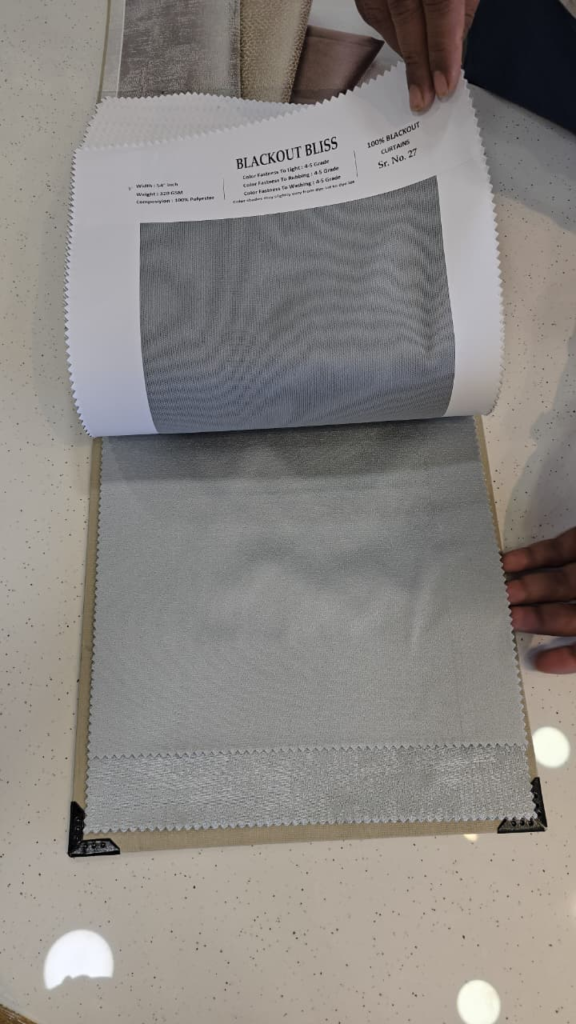
Fabric type and GSM Look for fabrics in the 280-400 GSM range if full blackout is your priority. Anything lower will dim a room significantly but may still let in a visible glow around the edges, especially in direct sunlight.
Color and heat absorption Darker colors, navy, charcoal, deep maroon, tend to absorb more heat, which can actually work against you in a hot climate like Pune’s if the curtain is on a sun facing window all day. Lighter or reflective-backed blackout curtains can offer a good balance of style and heat management.
Correct measurement This is one of the most common, and most avoidable, mistakes we see. A blackout curtain that isn’t wide or long enough will leave gaps at the sides and bottom, letting light leak in no matter how good the fabric is. For best results, curtains should extend well beyond the window frame on both sides and reach close to the floor. Our guide on how to measure curtains for your home breaks this down step by step.
Common buyer mistakes Beyond sizing, the other mistake we frequently see is choosing blackout fabric purely based on how dark or “premium” it looks, without checking the actual GSM or construction. A well-made lighter colored blackout curtain will often outperform a poorly constructed dark one.
Why Invest in Quality Blackout Curtains
Cheaper blackout curtains often use a single coated layer that degrades faster, the coating can crack, peel, or lose its opacity within a year or two of regular use, especially in humid climates. Quality blackout curtains, built with proper multi-layer construction, hold their light-blocking and insulating properties for years.
At DC Furnishings, we help homeowners choose blackout curtains based on room orientation, interior style, and privacy requirements, rather than recommending a one size fits all solution. A curtain that works perfectly in a north-facing bedroom might be entirely wrong for a west-facing living room, and that’s the kind of detail worth getting right before you buy. For a broader look at why fabric quality matters across your home, see our guide on investing in quality home furnishings.
Care & Maintenance Tips
- Check the care label before washing, many blackout curtains with bonded linings are better dry-cleaned than machine washed, since repeated washing can degrade the backing layer.
- If machine washing is safe for your fabric, use a gentle cycle with cold water and mild detergent to avoid damaging the blackout coating.
- Avoid wringing or twisting the fabric, this can crack the lining over time.
- Air dry rather than tumble dry where possible, especially for curtains with foam or acrylic backing.
- Vacuum curtains periodically with a soft brush attachment to remove dust buildup, which can affect both appearance and light blocking performance over time.
Frequently Asked Questions
1. Do blackout curtains block 100% of sunlight?
Not entirely. High-quality blackout curtains block 95-99% of light when properly fitted, but small gaps around the edges or top can still let in slivers of light unless paired with a well-fitted track or pelmet.
2. Are blackout curtains good for summer?
Yes, beyond blocking light, their insulating layers help keep interior heat gain down, which can ease the load on your AC during Pune’s peak summer months.
3. Can blackout curtains reduce electricity bills?
They can contribute to modest savings by reducing heat gain in summer and heat loss in winter, though the exact impact depends on your home’s overall insulation and window quality.
4. Do blackout curtains reduce outside noise?
They reduce noise to some extent thanks to their dense fabric layers, but they aren’t a substitute for dedicated soundproofing if noise is your primary concern.
5. Are blackout curtains suitable for living rooms?
They can be, but full blackout may make a living room feel closed off during the day. Many homeowners prefer layering a sheer curtain with a blackout option, or reserving full blackout for a media corner.
6. How do I wash blackout curtains?
Check the care label first. Many blackout curtains do better with dry cleaning or a gentle cold-water wash, since aggressive washing can wear down the opaque lining over time.
Final Thoughts
Blackout curtains aren’t just about a darker room, they bring real thermal insulation, noise reduction, UV protection, and privacy benefits that regular curtains can’t match, while still leaving room for style through fabric and color choice. The key is matching the right fabric, GSM, and fit to your specific room and climate needs, rather than picking blindly based on looks alone.
Looking for made to measure blackout curtains in Pune? DC Furnishings helps you pick the right fabric, GSM, and fit for your space, based on your room’s orientation, light exposure, and interior style.
LAXMI ROAD – Kunte Chowk, 693, Laxmi Rd, Bhatancha Bol, Narayan Peth, Pune, Maharashtra 411030 | Contact – 76207 54159
NIBM ROAD – Shop No 4, Kundan The Peak, NIBM Rd, Mohammed Wadi, Pune, Maharashtra 411048 | Contact – 09970366316
Contact us to discuss your curtain requirements, or explore our guide on top curtain styles for 2025 for more inspiration.