
Table of Contents
“Types of Window Blinds: Which Style Is Best for Your Home?“
Written by DC Furnishings Team | Reviewed by DC Furnishings Team 25+ years helping Pune homeowners choose curtains and upholstery fabric and all window treatment that fit real, everyday life.
By 3 PM on a summer afternoon, strong Pune sunlight can make an entire room feel unbearable and not every home wants heavy curtain fabric to solve that. This is exactly where window blinds come in. Window blinds are adjustable window coverings made from slats, fabric, or panels that let you control light and privacy with far more precision than a standard curtain, all while keeping a clean, modern look.
In this guide, we’ll walk through the different types of window blinds, compare them honestly against curtains, and help you figure out which style actually suits your room, your light conditions, and Pune’s climate.
What Are Window Blinds?
Window blinds are window coverings built from horizontal or vertical slats, woven fabric, or fitted panels that can be adjusted, raised, or drawn to control how much light and visibility passes through a window. Unlike curtains, which are typically pulled fully open or closed, most window blinds allow for graduated control tilting slats to let in filtered light while still blocking a direct view inside.
Because there are several distinct types of window blinds, each suited to different rooms and needs, it helps to look at how each one actually performs before deciding which is right for your home.
Types of Window Blinds
Roller blinds
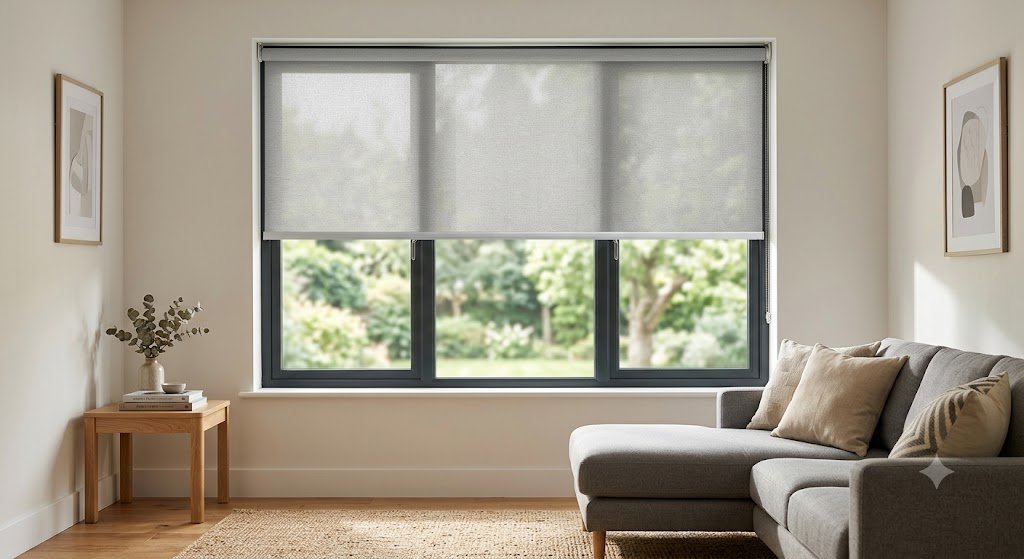
What they are: A single piece of fabric that rolls up and down on a tube mechanism. Best for: Homes wanting a sleek, minimal look with efficient use of window space. Advantages: Space efficient, easy to operate, works well with both light filtering and blackout fabric options. Limitations: Offers less nuanced light control than slatted blinds it’s generally an all or nothing (or fully drawn) operation rather than a gradual adjustment. Ideal rooms: Living rooms, home offices, kitchens.
Roman blinds
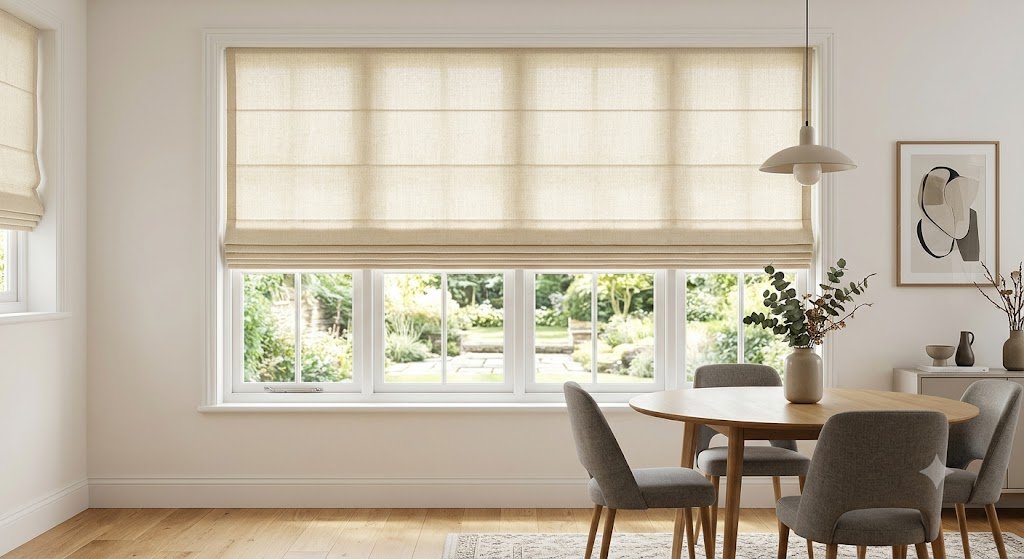
What they are: Fabric blinds that fold into neat horizontal pleats as they’re raised. Best for: Homeowners wanting a softer, more decorative look than a roller blind offers. Advantages: Elegant fabric appearance, wide range of pattern and texture choices. Limitations: Fabric blinds generally need more care than hard materials, and may not be the most practical choice in high moisture areas. Ideal rooms: Bedrooms, formal living rooms, dining areas.
Venetian blinds
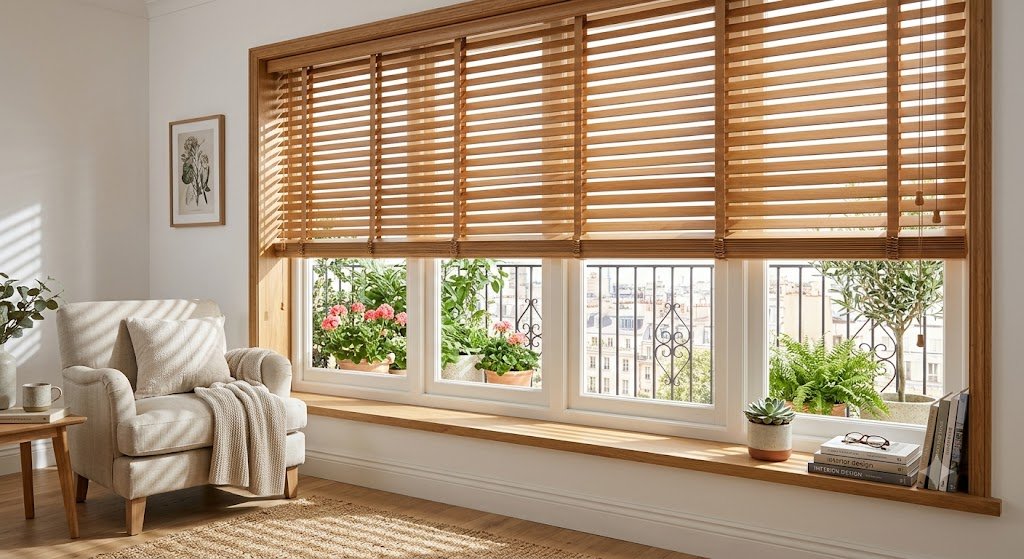
What they are: Horizontal slats (wood, faux wood, or aluminium) that tilt to adjust light and privacy. Best for: Rooms needing fine, adjustable control over both light and visibility. Advantages: Highly adjustable, durable, easy to clean (especially aluminium or faux wood). Limitations: Real wood can be less suitable in high humidity areas, where faux wood tends to be more practical. Ideal rooms: Living rooms, home offices, kitchens.
Vertical blinds
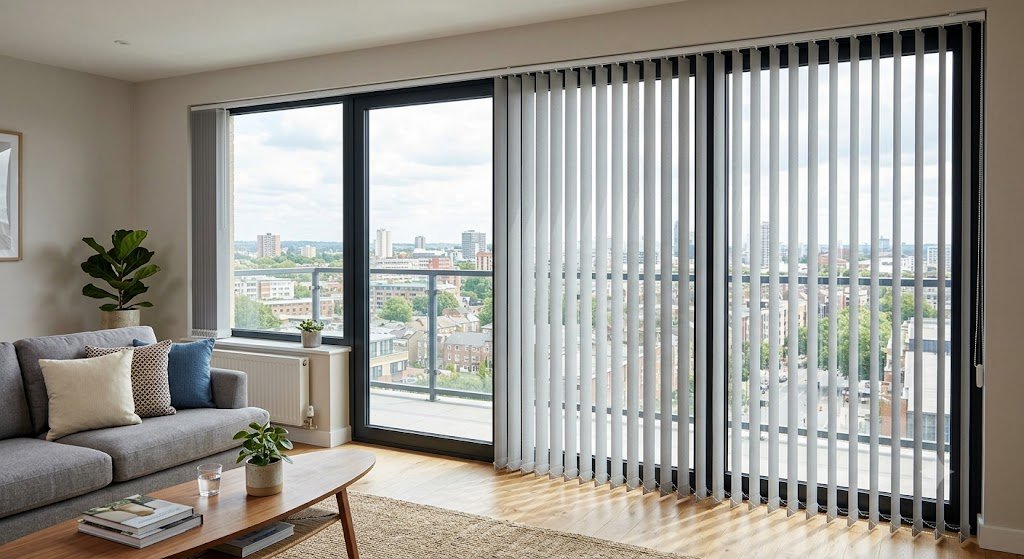
What they are: Vertical fabric or PVC slats that stack to one or both sides. Best for: Wide windows and sliding doors where horizontal blinds would be impractical. Advantages: Well suited to large openings, easy to operate for wide spans. Limitations: Can look dated in smaller, standard sized windows if not chosen carefully. Ideal rooms: Large windows, sliding doors, balcony access points.
Motorized blinds
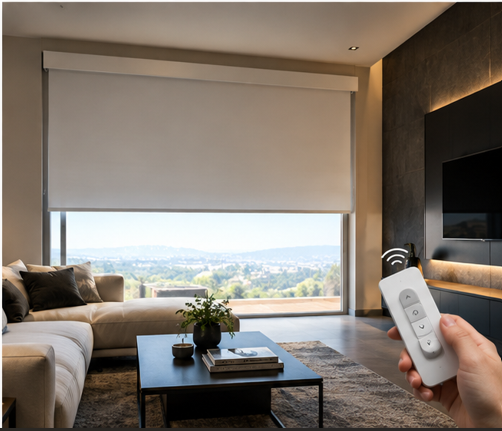
What they are: Any of the above blind types fitted with a motor for remote, app, or voice based control. Best for: Smart homes, hard to reach windows, or homeowners prioritizing convenience. Advantages: Effortless operation, scheduling capability, integrates with broader home automation. Limitations: Higher upfront cost, and typically requires either a power source or periodic battery maintenance. Ideal rooms: Large living rooms, home theatres, hard to reach or floor to ceiling windows.
Window Blinds vs Curtains
| Factor | Window Blinds | Curtains |
|---|---|---|
| Light control | Precise, adjustable (slat tilt) | Generally on/off, less graduated |
| Privacy | High, consistent | Varies by fabric density |
| Maintenance | Low to moderate (varies by material) | Moderate, fabric dependent |
| Aesthetic | Clean, modern, minimal | Soft, textile forward, traditional or contemporary |
| Cost | Varies widely by material and motorisation | Varies widely by fabric and customisation |
Neither option is universally “better” blinds tend to suit homeowners prioritizing precise light control and a minimal look, while curtains suit those wanting a softer, more textile forward feel. If you’re weighing both, our guide on exploring different curtain types is a useful next read.
One practical note worth flagging here: for wood slat Venetian blinds specifically, real wood can warp or discolour in high humidity conditions, whereas faux wood options tend to hold up better without sacrificing much of the look.
Which Window Blinds Are Best for Each Room?
Window Blinds For Living room
Roller or Venetian blinds tend to work well here, balancing light control with a clean look. If you’re deciding between blinds and curtains (or considering layering both) for this space, our guide on how to choose the right window treatment for your living room covers this in more depth.
Window Blinds For Bedroom
Roman blinds or blackout roller blinds suit bedrooms well, prioritizing a softer look alongside strong light control for sleep.
Window Blinds For Kitchen
Faux wood Venetian blinds or PVC vertical blinds handle kitchen humidity and easy cleaning better than fabric based options.
Window Blinds For Home office
Venetian blinds offer the adjustable light control useful for reducing screen glare without fully darkening the room.
Window Blinds For Large windows / sliding doors
Vertical blinds are generally the most practical choice, since they’re designed specifically for wide spans.
Window Blinds for Pune & Indian Homes
Pune’s strong sunlight, especially through west facing windows, makes heat gain a real concern for much of the year. This is where the right blind can genuinely help: closed, highly reflective blinds can reduce heat gain by around 45%, according to Department of Energy findings cited by Consumer Reports. That’s a meaningful reduction for rooms that heat up quickly during the day.
Dust and maintenance is another practical consideration: slatted blinds (Venetian, vertical) tend to be easier to wipe down regularly compared to heavier fabric blinds, which need more thorough cleaning to stay dust free.
Humidity matters too, particularly in areas of Pune that see heavier monsoon moisture. As mentioned earlier, real wood blinds are more prone to warping in these conditions, making faux wood the more practical choice for most homes.
Privacy in apartments is a common priority, especially in closely spaced buildings. Slatted blinds offer good adjustable privacy without fully blocking light, which fabric curtains alone don’t always manage as precisely.
Large balconies and sliding door windows, common in many Pune apartments, are generally best served by vertical blinds, given their suitability for wide openings.
Style & Interior Design Considerations
Blind style should tie into your room’s overall interior direction, not just its function. Roller blinds tend to suit minimal, contemporary interiors, while Roman blinds bring a softer, more traditional feel. Venetian blinds sit comfortably in both modern and classic spaces, depending on slat material and colour. If you’re exploring the aesthetic side of window treatments more broadly, our guide on modern window treatment ideas for living rooms is worth a look.
Why Accurate Window Measurements Matter
Getting the measurement approach right affects both function and appearance:
- Inside mount vs outside mount inside mount sits within the window recess for a clean, built in look; outside mount covers the frame entirely and can make a window appear larger.
- Window width and height needs to be measured precisely for whichever mount type you choose, since even small errors can cause gaps or fitting issues.
- Clearance around handles especially relevant for windows with handles or locks that need to remain operable once blinds are fitted.
- Large windows and sliding doors often need special consideration for stack width (where vertical blinds gather to one side) and overall panel weight.
Our guide on how to measure your windows correctly walks through these measurement basics in more detailed and useful groundwork before ordering any window treatment.
Which Blind Is Best for You?
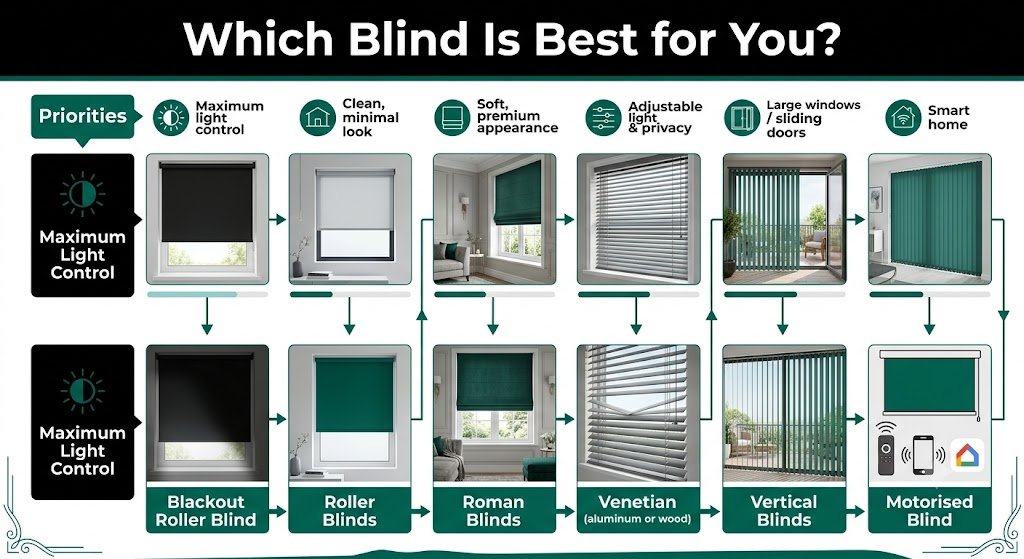
Choosing a blind ultimately comes down to what matters most to you in that specific room, light, look, privacy, or convenience rarely carry equal weight for every window in the house.
If maximum light control is your top priority, say, for a bedroom or media room, blackout roller blinds are the most effective option, cutting out nearly all incoming light with a single, clean mechanism. In rooms where total darkness matters even more, pairing this with full blackout curtains adds an extra layer of coverage.
For a clean, minimal look, roller blinds are hard to beat. Their flat, single panel design takes up very little visual space, making them a natural fit for modern, uncluttered interiors.
If you’re after a soft, premium appearance, Roman blinds bring a fabric forward, customized look that roller blinds simply can’t replicate, ideal for living rooms or bedrooms where you want the window treatment to feel more like a design feature.
When adjustable light and privacy matter most, such as in a home office or a room facing a busy street, Venetian blinds give you the finest control, letting you tilt the slats to dial in exactly how much light and visibility you want throughout the day.
For large windows or sliding doors, vertical blinds remain the most practical choice. Their design is specifically built to handle wide spans without the sagging or bunching issues smaller-format blinds can run into.
And if you’re building toward a smart home, motorized blinds let you control light and privacy remotely or on a schedule — a genuine convenience upgrade, especially for hard-to-reach or floor to ceiling windows.
| Your Priority | Consider |
|---|---|
| Maximum light control | Blackout roller blinds (or full blackout curtains if total darkness matters most) |
| Clean, minimal look | Roller blinds |
| Soft, premium appearance | Roman blinds |
| Adjustable light & privacy | Venetian blinds |
| Large windows / sliding doors | Vertical blinds |
| Smart home | Motorised blinds |
This isn’t an absolute rule the right choice ultimately depends on your specific window, room use, and the material best suited to your home’s conditions.
Style & Trends
Window treatments in Pune homes have been leaning toward cleaner, more minimal silhouettes in recent years, with slatted blinds and simplified curtain headings both trending in modern interiors. If you’re curious about broader curtain and window treatment trends shaping current interiors, our guide on latest window treatment trends for 2026 covers this in detail.
Window Blinds in Pune – DC Furnishings
At DC Furnishings, we believe choosing the right window blinds shouldn’t mean settling for whatever’s available off the shelf. With over 25 years of experience helping Pune homeowners find window treatments that actually fit their space, we offer a wide range of blind options, sleek roller blinds to elegant Roman blinds, adjustable Venetian blinds, and motorised systems for a more connected home. Every recommendation is based on your room’s light, privacy, and climate needs, not just what looks good on a shelf. And it doesn’t stop at selection, our team handles professional measurement and installation from start to finish, so you get a finished result that fits perfectly and functions exactly the way it should, without the guesswork.
Frequently Asked Questions
What are the different types of window blinds?
The main types include roller blinds, Roman blinds, Venetian blinds, vertical blinds, and motorised blinds each suited to different rooms, light needs, and interior styles.
Which window blinds are best for bedrooms?
Roman blinds or blackout roller blinds tend to work best, offering either a soft aesthetic or strong light control for better sleep.
Are blinds better than curtains?
Neither is universally better blinds generally offer more precise light control and a cleaner look, while curtains offer a softer, more textile forward feel. Many homes use a mix of both.
Which blinds are best for large windows?
Vertical blinds are generally the most practical option for large windows and sliding doors, since they’re specifically designed for wide spans.
Are window blinds suitable for Indian homes?
Yes particularly in homes facing strong sunlight, where reflective or slatted blinds can meaningfully reduce heat gain, along with easier maintenance in dusty conditions.
How do I choose the right window blinds?
Consider your room’s light needs, privacy requirements, humidity levels, and interior style, then match those priorities against the blind types outlined above.
Final Thoughts
There’s no single “best” window blind the right choice depends on your room, your light and privacy needs, and materials suited to Pune’s climate, particularly around heat and humidity. Getting these factors right from the start makes the difference between blinds that function well for years and ones that need replacing sooner than expected.
Looking for the right window blinds for your home? DC Furnishings helps you choose based on your room, your light conditions, and your lifestyle.
LAXMI ROAD – Kunte Chowk, 693, Laxmi Rd, Bhatancha Bol, Narayan Peth, Pune, Maharashtra 411030 | Contact – 76207 54159
NIBM ROAD – Shop No 4, Kundan The Peak, NIBM Rd, Mohammed Wadi, Pune, Maharashtra 411048 | Contact – 09970366316
Contact us to discuss your window Blinds requirements, or explore our guide on top curtain styles for 2025 for more inspiration.