Table of Contents
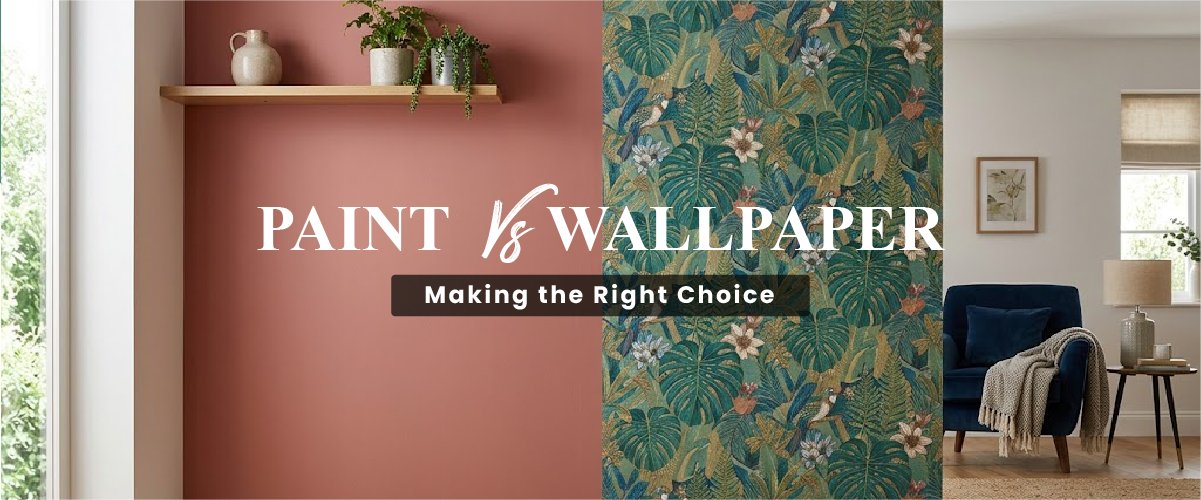
Paint vs Wallpaper :
Making the Right Choice for Your Home
You are staring at a blank wall. The room is freshly plastered, the furniture has been chosen, and everything is ready, except for this one decision. Do you reach for a paint brush, or do you reach for a wallpaper roll?
It is a question that divides homeowners, interior designers, and renovation enthusiasts more than almost any other. The wallpaper vs paint debate has been running for decades, and in 2026 it is more relevant than ever. Both options have evolved significantly. Paint has become more durable and eco conscious. Wallpaper has become more versatile, more beautiful, and more practical than most people realise.
In this guide, we cut through the noise and give you an honest, comprehensive comparison of wallpaper vs paint, covering aesthetics, durability, cost, installation, maintenance, eco credentials, and room by room suitability. We will also address the most common misconceptions that lead homeowners to make the wrong choice for their space.
Whether you are renovating a family home in Pune, decorating a new apartment, or simply refreshing a tired room, this guide will help you make a decision you will be confident about for years to come. Explore our full range of wall covering solutions at DC Furnishings Pune.
The Common Misconceptions — Let’s Clear the Air First
Before we get into the detailed comparison, it is worth addressing the misconceptions that tend to colour this debate unfairly. Many homeowners approach the wallpaper vs paint decision already biased by assumptions that simply no longer hold true.
Misconception 1: “Wallpaper is old fashioned”
This is perhaps the most persistent myth. For many people, the word wallpaper conjures images of busy floral patterns from the 1980s. The reality in 2026 is entirely different. Modern wallpaper designs encompass clean geometric prints, architectural textures, botanical murals, bespoke digital photography, and minimalist grass cloth, styles that feel completely contemporary and are actively chosen by leading interior designers for premium projects.
Misconception 2: “Wallpaper cannot handle moisture or damp walls”
This concern has a historical basis, older paper backed wallpapers were indeed vulnerable to moisture. But modern vinyl wallpapers, non woven wallpapers, and specifically moisture resistant varieties are designed precisely for humid environments. The benefits of wallpaper in 2026 include this kind of technical improvement that most homeowners simply are not aware of.
Misconception 3: “Wallpaper is far more expensive than paint”
The upfront cost of wallpaper is higher than paint, that part is true. But the advantages of wall paint on price disappear when you account for longevity. Quality wallpaper can last 15 to 20 years; paint typically needs redoing every 3 to 5 years. Over a 20 year period, the total spend on paint often significantly exceeds the one time investment in good wallpaper.
Misconception 4: “Paint is always the simpler, safer option”
Painting a room properly, cleaning the walls, applying primer, putting on two to three coats, waiting for each to dry, and managing the fumes, takes considerably more time and disruption than most people anticipate. Wallpaper installation by a professional, once the wall prep is done, is often faster and produces a more dramatic result.
Wallpaper vs Paint — A Head to Head Comparison
Aesthetic Appeal and Design Variety
When it comes to wallpaper vs paint for walls, the aesthetic difference is the most immediately obvious. Paint offers a clean, uniform finish that works beautifully in minimalist, Scandinavian, and contemporary interiors. With thousands of colour options and the ability to mix any shade precisely, paint gives homeowners complete control over the colour direction of a room.
Wallpaper, however, opens up a different dimension of design entirely. Textures, raised surfaces, metallic finishes, 3D effects, hand painted designs, photographic murals, and intricate repeat patterns, none of these are achievable with paint alone. The textured wallpaper designs trending in 2026 include tactile grasscloth, embossed geometric patterns, and richly detailed botanical prints that bring a depth and warmth to walls that paint simply cannot replicate.
The 2026 wallpaper trends gaining most traction include large scale tropical and botanical murals, tonal geometric patterns in earthy neutrals, metallic grass cloth for bedroom and living room feature walls, and custom digital print wallpapers with personalised imagery or bespoke patterns.
When paint wins aesthetically: ultra modern or all white interiors, spaces with complex architectural features where a busy pattern would compete, and open plan areas where visual consistency across multiple zones is important.
When wallpaper wins aesthetically: feature walls, luxury interiors, themed rooms, spaces where accent wall ideas need to make a real impact, and anywhere you want the walls themselves to be the design statement.
For detailed guidance on selecting a wallpaper that works in your space, see our guide on How to Choose the Perfect House Wallpaper Design.
Durability and Longevity — Which Lasts Longer?
This is where the wallpaper vs paint durability comparison tends to surprise people most. The common assumption is that paint is the hardier, more practical choice, but the evidence tells a different story.
A quality wallpaper, properly installed on a well prepared wall, can last between 15 and 20 years , sometimes longer. Premium non woven and vinyl wallpapers come with protective coatings that resist scuffs, stains, and surface damage. Many are washable, meaning day to day marks can simply be wiped off.
Paint, by contrast, typically needs repainting every 3 to 5 years in lived in spaces. In high traffic areas, hallways, living rooms, children’s bedrooms, paint shows marks, scuffs, and wear significantly sooner. Even premium paints fade, chalk, and peel over time, particularly in rooms exposed to strong sunlight or fluctuating humidity.
The Indian climate adds another dimension to this comparison. Pune’s monsoon seasons bring elevated humidity levels that can cause paint to peel and bubble, particularly on exterior facing walls or in poorly ventilated rooms. Quality wallpaper with moisture resistant properties, by contrast, is specifically engineered to handle this kind of environmental stress.
For a family home with children and pets, the wall covering options comparison often lands firmly in wallpaper’s favour once durability is considered seriously. The upfront investment in good wallpaper, and good wallpaper maintenance habits, tends to pay for itself well within the first decade.
Cost Analysis — What Are You Really Paying For?
The paint vs wallpaper cost question is more nuanced than it first appears, and working through the numbers honestly tends to shift most people’s perspective significantly.
Upfront costs: Paint is undeniably cheaper at the point of purchase. A basic interior paint job for a medium sized room in Pune might cost between ₹8,000 and ₹20,000 including labour and materials, depending on the paint quality. Wallpaper for the same room, including the paper itself and professional installation, might range from ₹15,000 for economy options to ₹50,000 or more for premium custom designs.
The long term calculation, however, tells a very different story. Consider a 12×12 room painted at ₹15,000 today. If you repaint every 4 years over a 20 year period, you will spend that ₹15,000 approximately five times, a total of ₹75,000. Wallpaper the same room for ₹35,000 today, and if it lasts 20 years, your total spend is ₹35,000. The cost of wallpapering a room over a generation is often significantly lower than the equivalent paint maintenance cycle.
There are also hidden costs in painting that homeowners frequently underestimate: professional wall preparation and priming, furniture moving and covering, two to three application coats, drying time that renders rooms unusable for days, and the disruption and inconvenience that compounds across multiple repainting cycles.
At the premium end, custom wallpaper designs represent the highest upfront investment, but also the longest lifespan, the most distinctive results, and the strongest contribution to a property’s perceived value.
Our Ultimate Guide to Types of Wallpapers covers the full range of options across different price points.
Installation Process — Which is Easier and Faster?
When homeowners ask for wallpaper or paint, which is easier to install, the answer depends on whether you are doing it yourself or hiring a professional.
A proper paint job involves cleaning and repairing the wall surface, applying primer, waiting for it to dry, applying the first coat of paint, waiting again, applying a second (and often third) coat, and then allowing full drying time before returning furniture to the room. The whole process typically takes two to four days, during which the room produces strong fumes from the paint and primer. Even after the paint has dried to the touch, outgassing can continue for several days.
Modern wallpaper installation has evolved considerably. Traditional paste the wall methods are now widely used, the paste goes on the wall rather than the paper, making alignment and repositioning much easier. Peel and stick wallpapers have also improved dramatically in quality and are a viable option for renters or those wanting a temporary solution. Professional wallpaper installation, once the wall is prepped, is typically faster than a full paint job and produces an immediate, finished result with no drying wait.
DIY is possible with both options, but wallpaper alignment, particularly around corners, doors, and windows, and when matching a repeat pattern, requires patience and precision. For premium wallpapers or complex spaces, professional installation is strongly recommended. The modern wall design solutions available today make professional wallpaper installation a smooth, relatively fast process when done by an experienced team.
Maintenance and Repairs — The Day to Day Reality
Both paint and wallpaper require some level of ongoing care, but the nature of that maintenance is quite different.
Paint maintenance is straightforward on paper: wipe marks off with a damp cloth, touch up scuffs with a brush. In practice, however, colour matching touch ups to existing painted walls is notoriously difficult. Paint fades and shifts subtly over time, meaning a fresh touch up often looks visibly different from the surrounding painted surface. The only reliable fix is to repaint the entire wall, which adds up in both cost and effort over the years.
Wallpaper maintenance is simpler than most people expect. Quality vinyl and non woven wallpapers are wipe clean and handle everyday spills and marks without damage. Small tears or damaged sections can often be patched with a remnant piece of the original wallpaper, a much less disruptive repair than repainting an entire wall. Keeping a small roll of leftover wallpaper after installation is always recommended for exactly this reason.
Water damage is where both materials face their biggest challenge. Paint that has experienced water ingress typically blisters, stains, and peels, requiring full preparation and repainting once the damp source is resolved. Wallpaper subjected to sustained moisture can lift at the seams and develop mould beneath the surface. In both cases, addressing the root cause of any damp is the essential first step. The practical lesson for Indian homes is to invest in moisture resistant paint or wallpaper varieties for rooms that experience seasonal humidity.
Environmental Considerations — The Eco Angle
Sustainability has become a genuine factor in interior design decisions, and the home interior design trends of 2026 reflect this strongly. Both paint and wallpaper have eco credentials to offer, and environmental shortcomings to acknowledge.
Paint’s environmental concern centres on VOCs, volatile organic compounds, which are released as paint dries and can negatively affect indoor air quality for days or even weeks after application. Conventional paints contain significant VOC levels. Low VOC and zero VOC formulations exist and are growing in availability, but they carry a price premium and are still less widely used than conventional options.
Wallpaper’s eco options have expanded significantly. Recycled content wallpapers, natural grasscloth made from sustainable plant fibres, FSC certified papers sourced from responsibly managed forests, and water based inks are all now available from quality manufacturers. These represent genuinely sustainable wall covering options for environmentally conscious homeowners.
The honest answer to which is greener is: it depends entirely on what specific product you choose. Both categories have sustainable options and less responsible ones. When selecting wallpaper, look for GREENGUARD Gold certification (which indicates low chemical emissions safe for indoor environments) and OEKO TEX Standard 100 (which confirms the product has been tested for harmful substances).
Room by Room Guide — Which Works Where?
Living Room
The living room is where wallpaper for living room applications tend to shine brightest. A feature wall with a bold textured design, a large scale botanical print, or a richly coloured geometric pattern creates an immediate focal point that anchors the entire room’s décor. Wallpaper works particularly well on the wall behind a sofa or a media unit, the two most natural “anchor walls” in a living room layout.
Paint works well in open plan living spaces where the priority is visual cohesion across a large area, or in very contemporary interiors where a single strong paint colour forms the design foundation. Accent wall ideas using paint, a deep charcoal or forest green on a single wall, can also be effective in living rooms with strong natural light.
For more guidance, revisit our How to Choose the Perfect House Wallpaper Design.
Bedroom
Bedrooms are arguably the room type where wallpaper for bedrooms delivers the greatest transformation. The intimacy and texture of a well chosen wallpaper, particularly behind the bed as a headboard accent wall, creates a luxurious, hotel like quality that paint rarely achieves.
In 2026, the headboard accent wall in wallpaper is one of the most popular bedroom design moves. Warm botanical prints, tonal textured designs, and subtle geometric patterns all work beautifully in this application. Paint remains a practical choice for those who redecorate frequently or who prefer a more serene, unadorned aesthetic.
For bedroom inspiration, browse our Wallpaper Designs for Bedrooms.
Kitchen and Bathroom
These are the rooms where paint has traditionally held its strongest advantage, primarily due to moisture exposure. And for splashback areas, tile surrounds, and surfaces directly adjacent to water sources, paint (or tile) remains the safer choice.
However, modern moisture resistant wallpapers are quietly changing this equation. On the upper walls of a kitchen, above the splashback zone, quality vinyl wallpaper can work beautifully and add character that painted walls struggle to match. The same applies to bathroom feature walls away from the shower and bath areas.
Kids’ Rooms and Home Office
Children’s rooms present an interesting dilemma. Patterned wallpaper creates magical, characterful spaces that children love, but children also change their tastes rapidly, and paint offers the flexibility of an easy refresh as they grow. A practical middle ground: use wallpaper on one feature wall and paint the remaining three, making future updates more manageable and affordable.
For home offices, textured or subtly patterned wallpaper has a meaningful role to play. Research consistently suggests that some visual texture in a workspace improves focus and reduces the cognitive monotony of staring at flat, uniform surfaces. A grasscloth or geometric wallpaper on the wall facing your desk is a particularly effective and elegant solution.
The Indian Market Perspective — Why Paint Still Dominates
To understand the current state of the wallpaper vs paint debate in India, you need to understand the marketing landscape. Companies like Asian Paints, Berger, and Nerolac collectively spend hundreds of crores annually on advertising, on television, digital platforms, and outdoor media. Wallpaper brands, by contrast, operate with a fraction of those budgets. The result is a significant awareness gap: many Indian homeowners simply have not been exposed to the quality, range, and practicality of modern wallpaper.
The shift, however, is unmistakably underway. Tier 1 cities, Mumbai, Pune, Bengaluru, and Delhi, are seeing a rapid increase in wallpaper adoption, driven by interior designers who have access to global trend information and by homeowners who have encountered wallpaper during international travel or through social media. Instagram and Pinterest in particular have played a significant role in introducing Indian consumers to interior wall decoration ideas that go well beyond paint.
The broader home interior design trends in India are also shifting decisively towards premium, personalised interiors, and wallpaper fits naturally into this direction. In Europe, the UAE, and Singapore, wallpaper is a standard tool in any interior designer’s repertoire. India is following that trajectory, and the pace of adoption in urban centres is accelerating.
So, Which is Better — Wallpaper or Paint?
The honest answer to which is better, wallpaper or paint, is that there is no single correct answer, the right choice depends on your specific room, your budget, your lifestyle, and your aesthetic goals. What we can say with confidence is this: the case for wallpaper is far stronger than most Indian homeowners currently appreciate, and the assumption that wallpaper or paint is a simple choice in paint’s favour deserves to be challenged.
Use the table below as a quick decision guide:
| SITUATION | RECOMMENDED CHOICE |
|---|---|
| Tight budget or renting | Paint |
| Long term investment, own home | Wallpaper |
| High traffic family areas | Durable wallpaper |
| Frequent style changes | Paint |
| Luxury or statement rooms | Wallpaper |
| Humid kitchens / bathrooms | Paint or moisture resistant wallpaper |
| Kids’ rooms | Either, depends on how often you redecorate |
| Home office, media room | Wallpaper for texture and acoustics |
The most important thing is to make the choice actively and deliberately, based on your room’s specific needs and your long term vision for the space, rather than defaulting to paint simply because it is more familiar.
The Future of Wall Coverings in India
The modern wall design solutions available in 2026 are more diverse, more durable, and more accessible than at any previous point, and the market data reflects this. The wallpaper industry in India is projected to grow significantly through 2026 to 2030, driven by rising disposable incomes, increasing exposure to global interior design trends, and the growing influence of interior designers on residential projects.
The parallels with other markets are instructive. In the United Kingdom, wallpaper is used in an estimated 35 to 40 percent of residential interiors. In the UAE and Singapore, premium wallpaper is a standard specification in new residential developments. India’s urban middle and upper middle class is increasingly looking to these markets for design inspiration, and wallpaper is following that aspiration upward.
Custom and digital print wallpapers are also making personalisation accessible at mid range price points. Custom wallpaper designs, once the exclusive preserve of luxury projects, can now be produced in smaller quantities and at more accessible price points, opening the door for homeowners who want a truly unique wall treatment without a prohibitive budget.
For daily design inspiration and to see how Pune homeowners are transforming their spaces with wallpaper, follow @dcfurnishingpune on Instagram. Our feed features before and after room transformations, new wallpaper arrivals, and ideas for every style and budget.
Why DC Furnishing is Pune’s Trusted Choice for Wallpaper and Wall Décor
At DC Furnishing, we have helped hundreds of Pune homeowners navigate exactly this decision , and we bring a level of local knowledge, product range, and design expertise that generic advice simply cannot match.
We understand Pune’s climate: the humidity of the monsoon, the heat of summer, and how these factors affect the long term performance of both paint and wallpaper in local homes. Our recommendations are always grounded in this real world context, not just the aesthetics.
Our wallpaper range covers the full spectrum: textured grasscloth and natural fibres, bold botanical and geometric prints, custom digital designs, moisture resistant options for kitchens and bathrooms, and eco certified products for the environmentally conscious homeowner. We also provide professional installation support and full design consultation to ensure that your wallpaper looks exactly right in your specific space.
Whether you are ready to commit to wallpaper or still weighing your options, we would love to help. Visit our showroom to see and touch the samples in person, because there is truly no substitute for experiencing the texture, colour, and scale of a wallpaper in real life.
Contact us at dcfurnishing.com/contact or explore our full collection at dcfurnishing.com.
Conclusion
The wallpaper vs paint debate does not have a single winner, and it was never meant to. Both are valuable tools in the interior designer’s kit, both have real strengths, and both have scenarios where they are the right choice.
What this guide has aimed to show is that the common default towards paint, particularly in the Indian market, is often based on outdated assumptions rather than current evidence. Modern wallpapers are durable, versatile, eco friendly, and, over a 15 to 20 year lifespan, frequently more cost effective than repeated repainting cycles. The design possibilities they offer are genuinely unmatched.
If you have always painted and never seriously considered wallpaper, 2026 is the year to look again. Visit a showroom, touch the samples, see the patterns at full scale, and give yourself the opportunity to make a genuinely informed decision. We think you will be pleasantly surprised by what modern wallpaper has become.
We would love to hear from you in the comments below: what is your current wall covering choice, and what are you considering for your next home project? And whenever you are ready to explore your options, the team at DC Furnishing is here to help.
© 2026 DC Furnishings Pune. All rights reserved.