Table of Contents
“How to Choose Sofa Colour for Small Living Rooms“
Written by DC Furnishings Team | Reviewed by DC Furnishings Team 25+ years helping Pune homeowners choose curtains and upholstery fabric and all window treatment that fit real, everyday life.
Quick answer: To choose a sofa colour for a small living room, start with your wall colour and the light the room gets. Pick a shade with a matching undertone, decide how much contrast you want, and check the fabric in person. Always test a swatch at home at different times of day before you decide.
Here’s a moment many of us know. You’ve found a sofa you love, the style is perfect, the size fits, and then you wonder: will this sofa colour make my living room feel smaller?
It’s a fair worry. In a compact room, the sofa is the biggest piece of furniture, so its colour sets the mood for everything around it. The right choice can make the space feel calm, balanced, and inviting. The wrong one can feel heavy or disconnected from the rest of the room.
In this guide, we’ll help you find the best sofa colour for a small living room. We’ll cover how to choose, which colours work, how to match them with walls, how lighting changes things, and the common mistakes to avoid. One honest note first: there’s no single perfect colour, and light colours don’t automatically make a room look bigger. Proportions, contrast, and your other furnishings all play a part.
How to Choose Sofa Colour for a Small Living Room: Step by Step
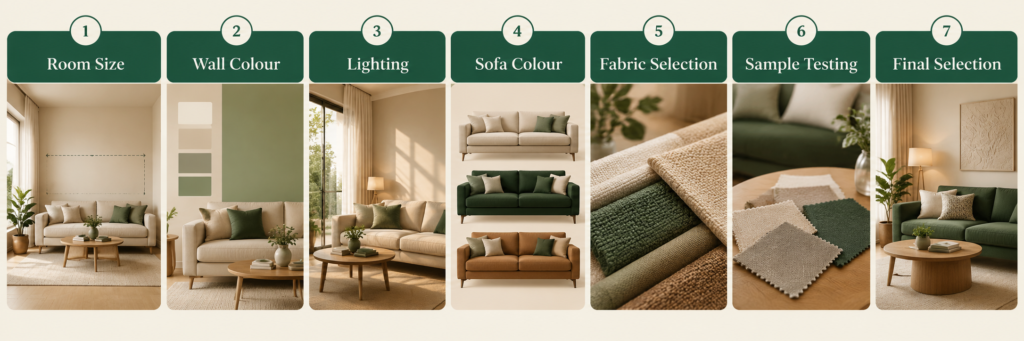
If you’ve been wondering how to choose sofa colour without second-guessing yourself, follow this simple order.
Step 1: Room size. Note how much floor space, wall space, and daylight you have. A small, narrow room behaves differently from a small, square one.
Step 2: Wall colour. Your walls are the backdrop. Decide whether you want your sofa to blend in softly or stand out gently.
Step 3: Lighting. Think about which direction your windows face and how bright the room is at different hours.
Step 4: Sofa colour. Shortlist two or three shades that suit your walls and lighting.
Step 5: Fabric selection. Texture and finish change how a colour looks and how well it handles daily use. Our guide to choosing the right upholstery fabric covers this in detail.
Step 6: Sample testing. Take swatches home and look at them over a full day.
Step 7: Final selection. Choose the shade that still looks good in morning light, afternoon sun, and evening lamps.
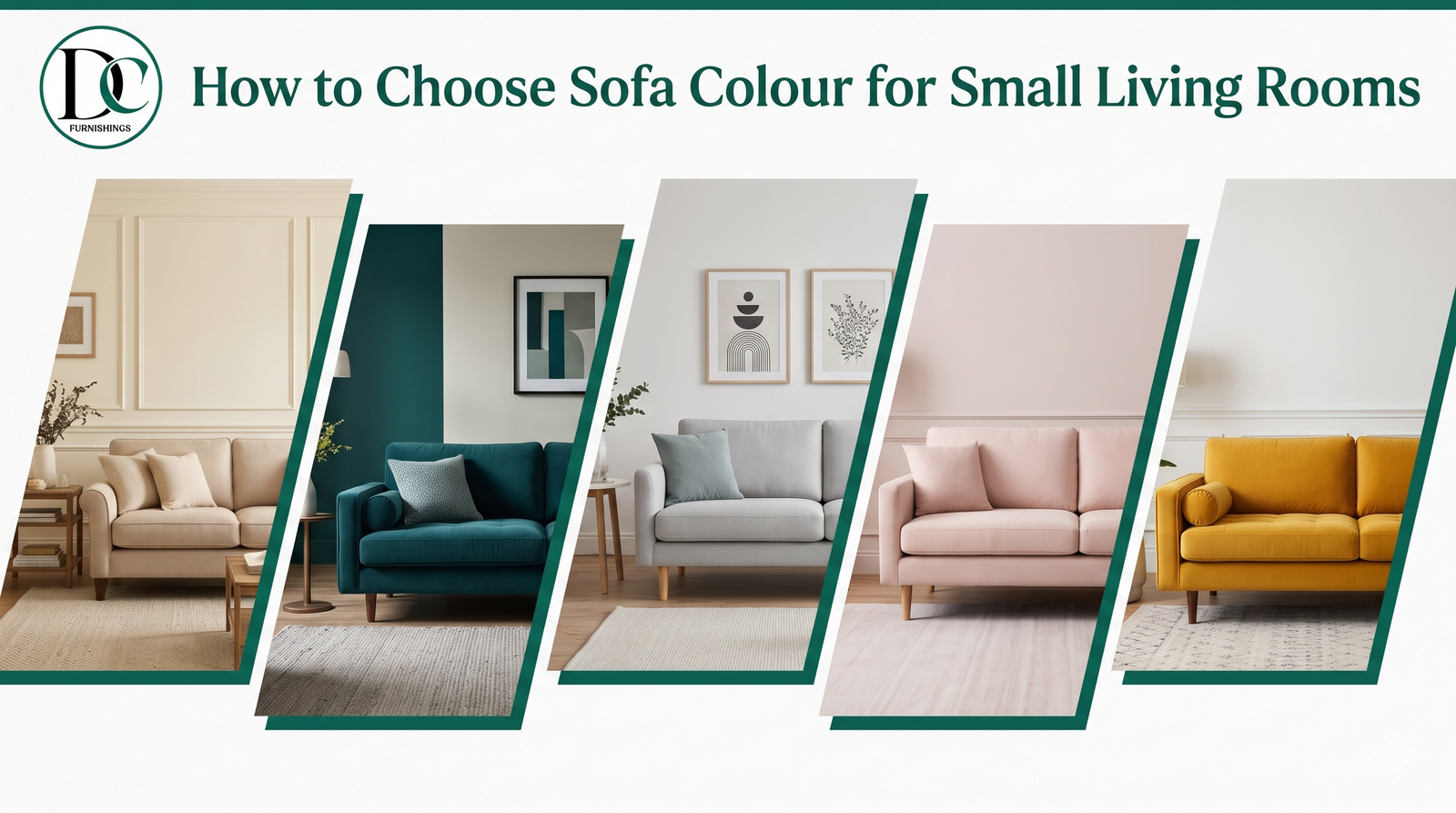
Best Sofa Colour for Small Living Rooms
These sofa colour ideas for small spaces are grouped by mood, so you can find the style that fits your home.
Neutral Colour Palette: Beige, Cream, Grey, and Taupe
A neutral colour palette is the easiest place to start. Beige, cream, light grey, and taupe sofas blend smoothly with most walls and let your cushions, rugs, and curtains do the talking. They tend to feel calm and open. The trade-off is that cream and light shades can show stains more readily, so think about your household before choosing.
Soft Earthy Tones: Olive, Terracotta, and Muted Brown
Earthy shades bring warmth and character without feeling loud. A muted terracotta or olive sofa can make a small room feel cosy and grounded. Just balance it with lighter walls and accessories so the room doesn’t feel heavy.
Cool Tones: Dusty Blue and Sage
Dusty blue and sage green feel fresh and relaxed. They work well in rooms with plenty of natural light, where the cooler undertone stays soft. In dimmer rooms, they can look flatter, so test them first.
Bold Colours: Navy, Emerald, and Charcoal
Deeper shades add drama and sophistication. They can work in a small living room if the walls are light and the rest of the furniture is kept simple. Keep in mind that strong contrast can visually dominate a compact space.
Sofa Colour Combinations with Different Wall Colours
Getting the sofa colour combination right is mostly about undertones and contrast. Warm walls usually pair well with warm sofas, and cool walls with cool ones. Then you decide how much contrast you want: soft and tonal, or clear and defined.
| Wall Colour | Sofa Colour Suggestion | Visual Effect |
|---|---|---|
| White | Beige or light grey | Airy and balanced |
| Cream | Taupe or olive green | Warm and inviting |
| Light grey | Charcoal or dusty blue | Modern contrast |
| Pastel green | Cream or tan | Soft and natural |
| Beige | Terracotta or muted brown | Earthy and cosy |
Treat these as starting points, not rules. Your curtains matter too, since they sit right beside the sofa. For ideas on pairing the two, see our tips on curtain colour combinations.
How Lighting Changes Sofa Colour Appearance
The same sofa can look quite different from one room to another, or even from morning to evening. Natural lighting shifts through the day, and artificial light adds another layer. Warm bulbs can make beiges and creams look richer. Cool white bulbs can make the same shades look flatter or greyer.
Room direction matters too. A bright, well-lit room shows colours closer to how they really are, while a dimmer room can make them look deeper or duller.
The simplest fix is to test in your own space. Place swatches where the sofa will sit and check them in morning, afternoon, and evening light, using both daylight and lamps. Room & Board’s swatch guide recommends exactly this, and DFS has a helpful guide on lighting and sofa colours. If you’re also thinking about wall colour, Asian Paints explains why testing colours in your room’s light matters.
Which Sofa Colour Makes a Small Living Room Look Bigger?
This is the question most people ask, and the honest answer is: it depends. Lighter, softer colours often feel more open, particularly when they’re close to the wall colour. This is a matter of visual space perception, where less contrast between the sofa and the walls can make the room feel calmer and less divided.
But colour is only one part of the picture. Room proportions, furniture size, leg style, and how much clutter surrounds the sofa all affect how large a room feels.
Here’s an example. Imagine a compact living room with cream walls and limited daylight. A warm beige sofa could keep the room feeling soft and cohesive, while a stark white one might look harsh against the warmth of the walls. The right answer comes from the whole room, not just the sofa.
Can a Dark Sofa Work in a Small Living Room?
Yes, it can. Dark sofas have a reputation for shrinking a room, but they can work well when the rest of the room supports them.
Imagine a bright living room with white walls and good daylight. A navy or deep olive sofa can look striking there, as long as the rugs, curtains, and cushions are kept light and balanced. A sofa with slim legs, which lets you see the floor underneath, can also reduce the sense of bulk.
There are limits. Dark fabrics can show lint, dust, and pet hair more readily, and in a dim room, a dark sofa can feel heavy. If you love the look, balance it with light walls, good lamps, and lighter accessories.
Choosing Upholstery Fabric and Texture for Your Sofa Colour
Colour and upholstery fabric go hand in hand. A smooth, matte fabric shows colour evenly. A textured fabric adds depth and subtle shadows, which can make a colour look richer. Shiny finishes catch light and can shift the shade as you move around the room.
Daily use matters too. White and cream fabrics are lovely but may show stains more readily. Mid-tones and subtle textures tend to hide everyday wear better. In Pune, it’s also worth thinking about dust and humidity, and how easy the fabric is to clean.
Don’t forget your windows. A sofa and its curtains work best when they share a similar level of formality and texture. Our guide to curtain fabrics and materials can help you coordinate the two.
Common Sofa Colour Mistakes to Avoid
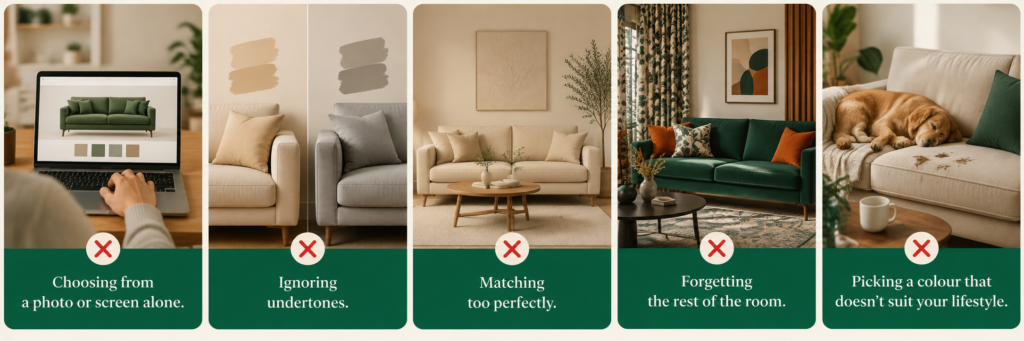
- Choosing from a photo or screen alone. Screens display colour differently, so always check a physical swatch.
- Ignoring undertones. A cream with a yellow undertone can clash with a cool grey wall.
- Matching too perfectly. A sofa identical to the wall can feel flat, while a very sharp contrast in a small room can feel heavy.
- Forgetting the rest of the room. Flooring, curtains, and rugs all affect how the sofa colour looks. See our advice on choosing curtains for your living room for a more coordinated result.
- Picking a colour that doesn’t suit your lifestyle. If you have kids or pets, think about stains and wear before choosing a very light shade.
Expert Tips from DC Furnishings
Our team looks at more than colour when recommending a sofa. We consider wall colours, the amount of daylight, fabric swatches, and how the sofa will actually be used day to day.
As Khalil Aslam Shaikh, Owner of DC Furnishings, puts it: “People often fall in love with a colour on a screen or in a showroom. We always ask them to see the fabric in their own room, in their own light, and to think about how they’ll use the sofa every day. A colour that works in real life is better than one that only looks good in a photo.”
A few simple tips from us:
- Start with your walls and lighting, then choose the sofa colour
- Shortlist two or three shades, then test swatches in the room
- Balance bold sofa colours with lighter walls and accessories
- Choose fabric for how you live, not just how it looks
Custom Sofa Customization in Pune: DC Furnishings
Can’t find a sofa in exactly the right shade? That’s where custom sofas make a real difference. At DC Furnishings, we offer both sofa upholstery and fully custom sofas in Pune, with full customization options available. You decide the style, size, and finish, and you’re free to choose any fabric you like, so the colour, texture, and look suit your walls, your lighting, and your lifestyle.
For a small living room, this flexibility matters. A sofa made to the right proportions, in a fabric and colour you’ve tested in your own light, is far more likely to feel like it truly belongs in your space.
Visit our showroom, see fabric options up close, and talk to our team about your living room. You can also explore DC Furnishings online.
Frequently Asked Questions About Sofa Colour
1. What is the best sofa colour for a small living room?
Neutral shades like beige, cream, light grey, and taupe are popular because they’re easy to match. The best choice still depends on your walls and lighting.
2. Which sofa colour makes a small living room look bigger?
Lighter colours close to your wall colour often feel more open, but room proportions and furniture size matter too.
3. Can a dark sofa work in a small living room?
Yes, if the walls are light, the room has good lighting, and accessories are kept balanced. Slim legs help too.
4. What sofa colour goes with white walls?
Beige and light grey create an airy, balanced look. Navy or olive can add contrast if the rest of the room is kept simple.
5. How do I match sofa colour with walls and curtains?
Match undertones first, then decide on contrast. Choose curtains in a related shade or texture so the sofa and windows feel coordinated.
6. Does natural lighting change how a sofa looks?
Yes. Colours shift between morning, afternoon, and evening, and between daylight and lamps. Test swatches at different times.
7. Are cream or white sofas practical?
They look lovely but may show stains more readily. They suit homes with fewer spills, or fabrics chosen for easy cleaning.
8. Should I get a fabric swatch before buying a sofa?
Absolutely. A swatch lets you see the true colour and feel the texture in your own room before committing.
Choose the Right Sofa Colour for Your Home
The best sofa colour for your living room comes from a few simple checks: your walls, your lighting, your fabric, and the way you live. Start there, test swatches at home, and choose the shade that feels right at every time of day.
If you’d like a hand, visit the DC Furnishings showroom or get in touch with our team. We’ll help you choose the right colour and fabric, and if you want something made just for your space, we can create a custom sofa for your home.
LAXMI ROAD – Kunte Chowk, 693, Laxmi Rd, Bhatancha Bol, Narayan Peth, Pune, Maharashtra 411030 | Contact – 76207 54159
NIBM ROAD – Shop No 4, Kundan The Peak, NIBM Rd, Mohammed Wadi, Pune, Maharashtra 411048 | Contact – 09970366316
Contact us to discuss your curtain Stitching requirements, or explore our guide on top curtain styles for 2025 for more inspiration.
References:
- Room & Board, How to use your swatches: https://www.roomandboard.com/design/inspiration/materials/how-to-use-your-swatches
- DFS, Lighting and sofa colours: https://www.dfs.co.uk/help/lighting-and-sofa-colours
- Asian Paints, Test paint colour before buying: https://www.asianpaints.com/blogs/test-paint-colour-before-buying.html